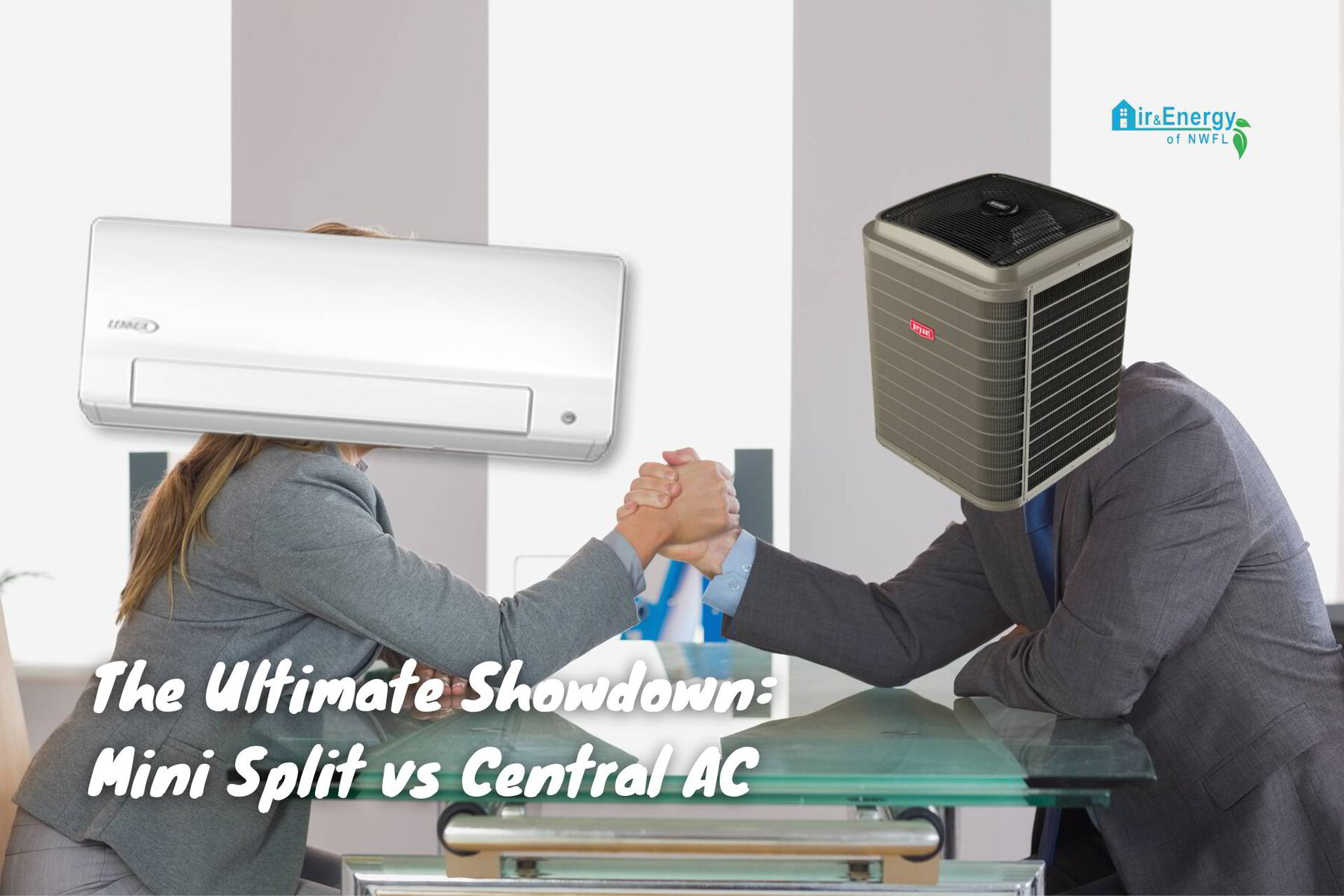
Split air conditioners are suitable for individual rooms, providing targeted cooling, while central air systems cool the entire home evenly. They each have their benefits depending on your needs and budget.
Central air conditioning systems are ideal for larger homes and offer consistent temperatures throughout. However, split air conditioners are more cost-effective for cooling specific areas. Deciding between the two depends on factors like budget, size of the space, and energy efficiency goals.
Understanding the differences in performance, installation, and maintenance of split vs central air conditioning systems can help you make an informed decision for your cooling needs.
Credit: airandenergynwfl.com
Energy Efficiency
When it comes to choosing the right air conditioning system, considering energy efficiency is crucial. Whether you’re deciding between a split air conditioner or a central air conditioning system, understanding their energy efficiency is essential to make an informed decision.
Seer Rating Comparison
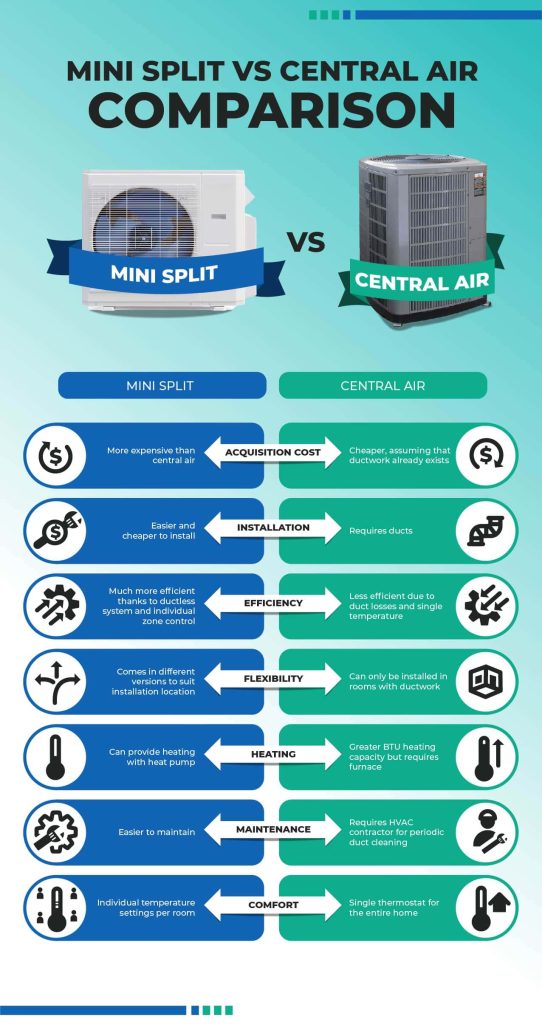
The Seasonal Energy Efficiency Ratio (SEER) is a measure used to evaluate the energy efficiency of air conditioners. A higher SEER rating indicates greater energy efficiency. Split air conditioners generally have a SEER rating between 20 to 24, while central air conditioners often range from 14 to 25. Split systems often offer slightly higher SEER ratings, providing better energy efficiency.
Usage And Energy Consumption
Split air conditioners are designed to cool specific zones or rooms, allowing for targeted cooling and potentially lower energy consumption. On the other hand, central air conditioners cool the entire house simultaneously, which can lead to higher energy consumption, especially if certain areas do not require cooling. However, central air conditioners with variable speed motors can adjust their output to match the cooling needs, enhancing energy efficiency.
Installation Costs
Comparing the installation costs between Split Air Conditioners and Central Air Systems can help you make an informed decision.
Initial Investment
Split Air Conditioner: Less expensive upfront cost for both unit and installation.
Central Air System: Higher initial investment due to the complex nature of the system.
Installation Complexity
Split Air Conditioner: Relatively simple installation process that may not require professional assistance.
Central Air System: Requires professional installation due to its complexity and often involves ductwork.
Operating Costs
When it comes to choosing between a split air conditioner and a central air conditioning system, it is important to consider the operating costs. Understanding the monthly expenses and long-term cost analysis can help you make an informed decision for your cooling needs.
Monthly Expenses
In terms of monthly expenses, a split air conditioner typically offers a more cost-effective option. This is because a split AC system allows you to cool specific areas or rooms in your home, rather than cooling the entire house. By controlling which areas are cooled, you have the ability to lower your energy consumption and reduce your monthly utility bills.
On the other hand, central air conditioning systems are designed to cool the entire house. While they offer the convenience of regulating the temperature throughout your home with a single thermostat, the downside is higher energy consumption and potentially higher monthly expenses.
Another factor to consider when comparing monthly expenses is the size of your home. If you have a smaller residence, a split air conditioner may be sufficient to cool the space efficiently, leading to lower monthly cooling costs. However, for larger homes, a central air conditioning system may be more suitable as it can provide consistent cooling throughout the entire house.
Long-term Cost Analysis
When analyzing the long-term costs of split air conditioners versus central air conditioning systems, it is essential to consider not only the initial purchase and installation costs but also the maintenance and repair expenses.
Split air conditioners generally have a lower upfront cost compared to central air conditioning systems since they are less complex and require simpler installation. However, it is crucial to factor in the ongoing maintenance costs, including regular cleaning of filters and coils, as well as potential repairs. While split units may require periodic maintenance, they are generally more cost-effective to maintain compared to central systems.
Central air conditioning systems, on the other hand, may have higher initial costs due to the complexity of the installation process and the need for ductwork. Additionally, regular maintenance and potential repairs for central systems can be more expensive. However, it is worth noting that central air conditioning systems often come with warranty options that can help offset these costs.
Overall, to determine the long-term cost analysis, it is important to consider factors such as the size of your home, your cooling needs, and your budget. By weighing these factors, you can make a decision that aligns with your financial goals and ensures optimal cooling comfort for your living space.
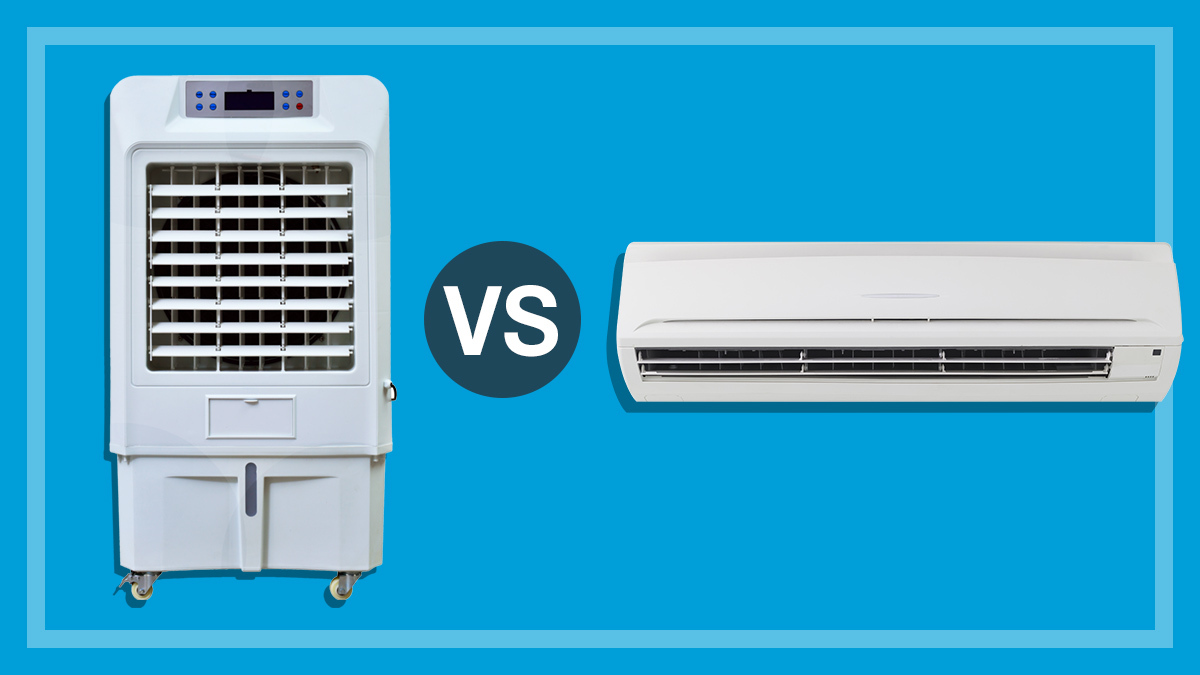
Credit: www.choice.com.au
Cooling Performance
Split air conditioners provide superior cooling performance compared to central air conditioners. Their individual units allow for more precise temperature control and faster cooling, ensuring a comfortable environment in a shorter time.
Consistent Temperature Control
A crucial factor to consider when comparing split air conditioners and central AC systems is the consistency of temperature control. With split air conditioners, you can expect a more precise cooling experience.
Split air conditioners are equipped with individual cooling units in different rooms, allowing for independent temperature control. This means that each room can maintain its desired temperature, ensuring maximum comfort for all occupants.
On the other hand, central air conditioning systems provide cooling to the entire house from a central unit. While this allows for convenient overall temperature control, it may result in some rooms being cooler or warmer than desired.
Summary: Split air conditioners offer consistent temperature control with independent cooling units in each room, while central AC systems provide overall temperature control but may have variations in room temperatures.
Room Coverage
When it comes to cooling performance, room coverage plays a significant role. Split air conditioners are ideal for cooling specific zones, making them an excellent choice for small to medium-sized spaces. These units are designed to provide efficient cooling for individual rooms or areas.
On the other hand, central air conditioning systems are better suited for larger areas and multiple rooms. They are capable of providing uniform cooling throughout the entire house.
It’s worth noting that split air conditioners can be expanded to cover multiple rooms by installing additional indoor units. However, it’s important to consider the increased power consumption and the potential need for periodic maintenance.
Summary: Split air conditioners are great for cooling specific zones or individual rooms, while central AC systems are more suitable for larger areas or multiple rooms.
Environmental Impact
Split air conditioners and central air conditioners have differing environmental impacts. While split ACs are more energy-efficient and eco-friendly due to individual thermostats in each room, central ACs consume more energy as they cool the entire house, resulting in higher carbon emissions.
Always consider the environmental impact when choosing the right AC for your needs.
Refrigerants Used
Split ACs use R410A, R32 refrigerants, more environmentally friendly than Central AC’s R-22 refrigerant.
Carbon Footprint
Split ACs have smaller carbon footprint due to individual units only cooling specific areas. Central ACs have higher energy usage as they cool entire buildings.
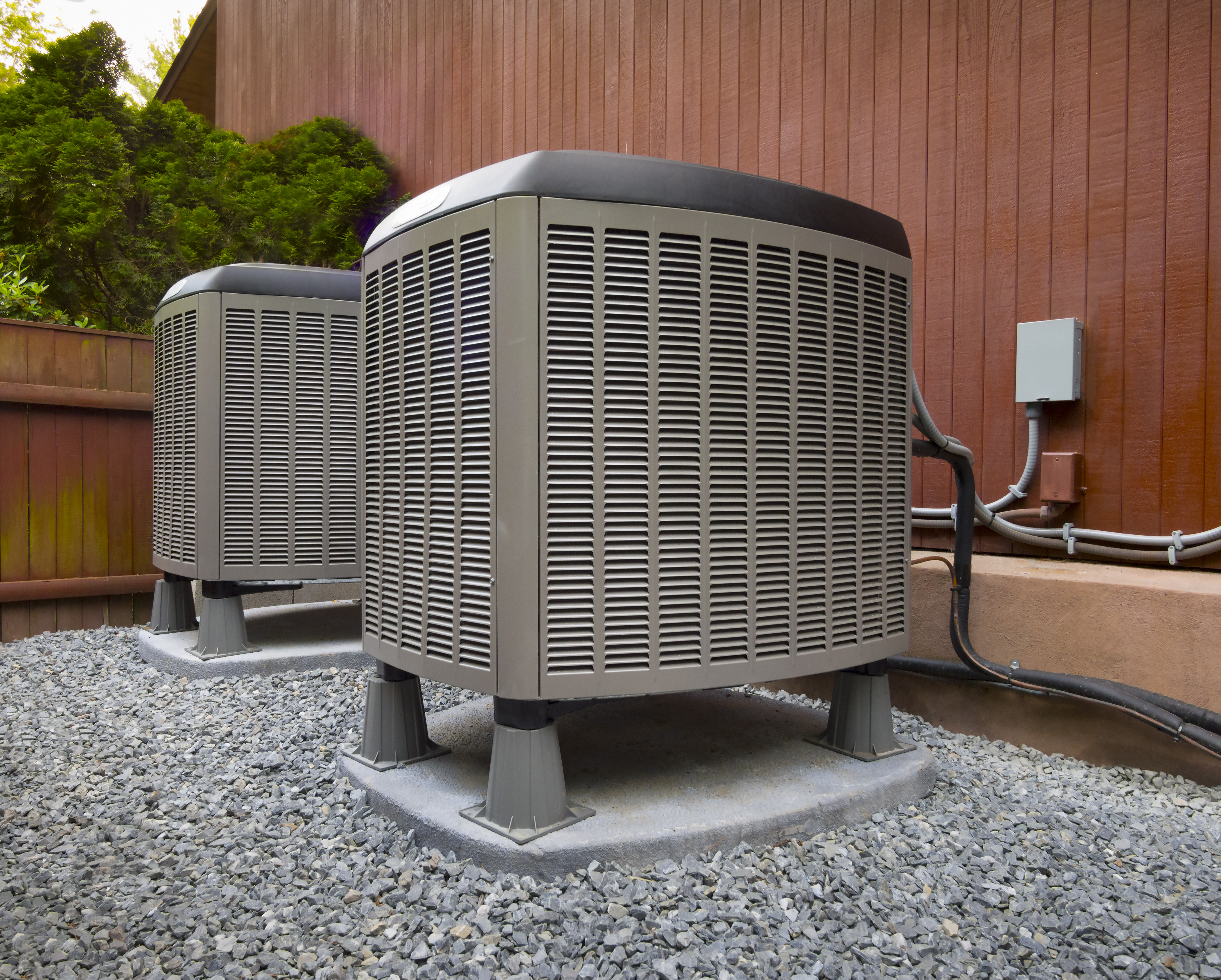
Credit: www.energy.gov
Maintenance And Repairs
When deciding between a split air conditioner and a central AC system, understanding the maintenance and repair differences is crucial.
Routine Service Needs
- Split AC: Simpler maintenance like cleaning filters and coils.
- Central AC: Requires professional service due to complex ductwork.
Repair Costs
- Split AC: Generally lower repair costs compared to central systems.
- Central AC: Costly repairs due to intricate components like compressors.
Frequently Asked Questions On Split Air Conditioner Vs Central
Is Central Ac Better Than Split Ac?
Central AC cools entire home efficiently, but split AC offers more flexible cooling options for individual rooms.
Which Is Cheaper Central Ac Or Split Ac?
Central AC is generally cheaper to install, but split ACs can be more cost-effective for cooling smaller spaces.
Should I Replace My Central Air With Mini-split?
Yes, replacing your central air with a mini-split can be a cost-effective and energy-efficient option. Mini-splits offer personalized comfort and can be a great choice, especially if you are looking to cool specific areas. Additionally, they are often easier to install and maintain.
What Are The Disadvantages Of A Mini-split?
Mini-splits have limitations like high upfront cost, may not be effective in extreme climates, and require professional installation.
Conclusion
To sum up, both split air conditioners and central systems have their pros and cons. Consider your space, budget, and cooling needs to make the best choice. Whether it’s the convenience of zoned cooling or the cost-effectiveness of a central system, prioritize what suits you best.
Ultimately, the decision is yours.