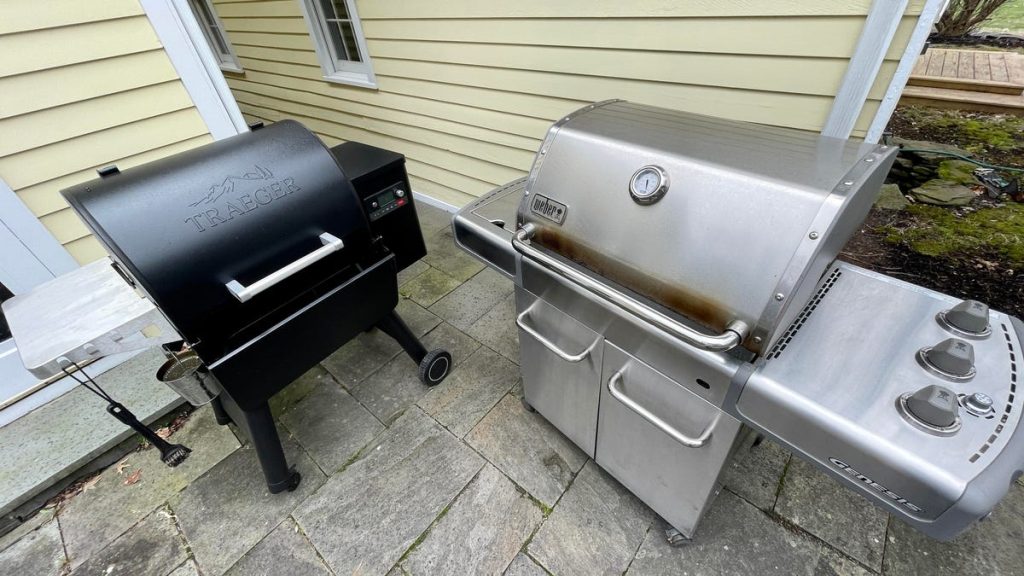
Propane grills are suitable for high-temperature searing, while pellet grills are better for low and slow smoking. Pellet grills need an electrical outlet to work and are not portable, whereas propane grills produce fewer emissions, making them a healthier and more eco-friendly option.
When it comes to choosing a grill, the decision between propane and wood pellet can be confusing. Both have their merits, and it ultimately comes down to personal preference. Propane grills are easy to use, heat up quickly, and provide varying levels of heat, but they don’t offer the same level of smoky flavor as wood pellets.
In contrast, wood pellet grills produce a distinct smoky flavor and have a wide temperature range, making them ideal for smoking meats. However, pellet grills require power and are not as portable as propane grills. So, which is better: propane or wood pellet grills? Let’s take a closer look at the pros and cons of each.
Credit: energex.com
Propane Vs Wood Pellet Grill: Which One Grills Better?
Propane and wood pellet grills are both excellent cooking options, but the choice comes down to your personal preference. If you prefer high-temperature searing, a gas grill is best. However, if you prefer slow smoking, choose a pellet grill.
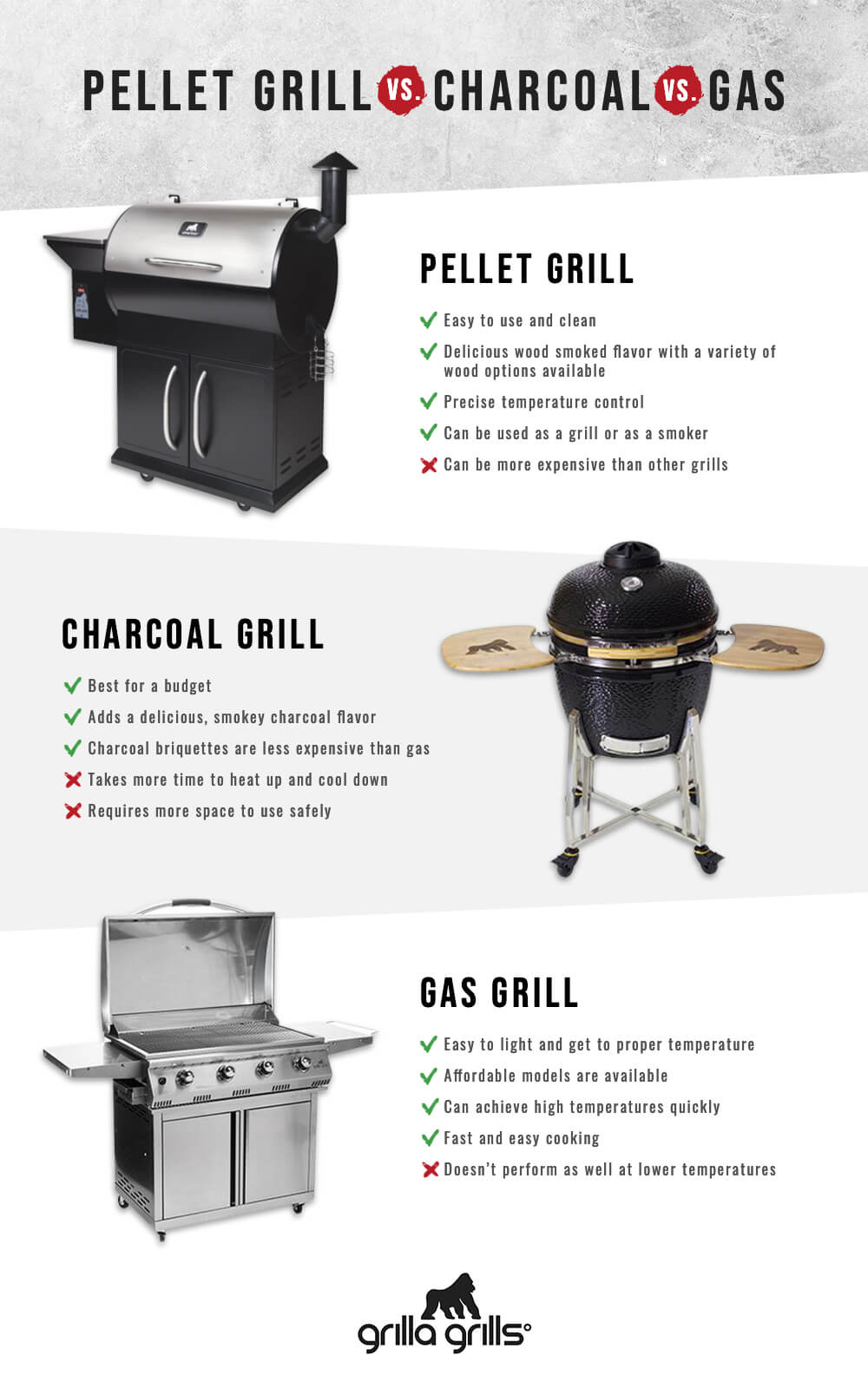
When it comes to grilling, choosing the right fuel can make all the difference in the world. While propane and wood pellet grills are two of the most popular options on the market, many grilling enthusiasts are left wondering: which one grills better? In this article, we’ll take an in-depth look at the fuel comparison between propane and wood pellet grills, grilling speed, flavor profile, versatility in cooking methods, maintenance, portability, and environmental impact and health considerations.
Fuel Comparison Between Propane And Wood Pellet Grills
Propane grills are powered by propane gas, which is stored in an external tank and connected to the grill via a hose. Wood pellet grills, on the other hand, are powered by compressed wood pellets, which are loaded into a hopper and fed into the grill as needed. While propane grills offer convenience and ease of use, wood pellet grills offer a unique smoky flavor that is hard to replicate.
Grilling Speed
When it comes to grilling speed, propane grills are the clear winner. They can heat up quickly and reach high temperatures in a matter of minutes. Wood pellet grills, on the other hand, take longer to heat up and may not get as hot as propane grills. However, if you’re looking to smoke your food low and slow, wood pellet grills are the way to go.
Flavor Profile
When it comes to flavor, wood pellet grills are the clear winner. The wood pellets impart a smoky flavor to the food that is hard to replicate with propane grills. That being said, propane grills can still produce delicious food, and with the right seasoning and marinades, the flavor can be just as good as wood-fired cooking.
Versatility In Cooking Methods
When it comes to versatility in cooking methods, wood pellet grills are the clear winner. They can be used for low and slow smoking, as well as high-temperature grilling and even baking. Propane grills, on the other hand, are limited to high-temperature grilling and may not be suitable for low and slow smoking.
Maintenance
When it comes to maintenance, propane grills are generally easier to clean and maintain than wood pellet grills. Wood pellet grills require regular cleaning of the hopper, ash tray, and fire pot, while propane grills only require occasional cleaning of the grill grates and burners.
Portability
When it comes to portability, propane grills are the clear winner. They are lightweight and easy to move around, making them ideal for tailgating, camping, and other outdoor activities. Wood pellet grills, on the other hand, are heavier and may require an electrical outlet, making them less portable.
Environmental Impact And Health Considerations
When it comes to environmental impact and health considerations, propane grills are generally considered to be the more environmentally friendly and healthier option. Propane produces fewer emissions than wood pellets, and grilling with propane greatly reduces your exposure to carcinogens that can end up in your food when using wood pellets.
Credit: www.grillagrills.com

Credit: www.cnet.com
Frequently Asked Questions Of Propane Vs Wood Pellet Grill
Which Is Better Propane Grill Or Pellet Grill?
Gas grills, also known as propane grills, are better for high-temperature searing, while pellet grills excel at low and slow smoking. Pellet grills require an outlet to function, so they’re not portable but produce fewer emissions. Gas grills use either propane or natural gas as a fuel source.
Ultimately, the choice depends on your cooking preferences and requirements.
What Are The Negatives Of A Pellet Grill?
Pellet grills require an outlet to function, aren’t portable, and may get damaged when moved frequently. They’re not meant for wet-weather use and don’t provide the same high-heat searing capabilities as gas grills.
Is It Healthier To Cook With Wood Or Propane?
Both wood and propane have their benefits when it comes to cooking, but propane is a healthier option. Propane grills produce fewer emissions and reduce exposure to carcinogens compared to charcoal-fired grills that use wood. Propane is also more environmentally friendly than wood since it burns cleaner and does not contribute to deforestation.
Do Pellets Last Longer Than Propane?
Pellet grills don’t last longer than propane grills. Both grills have different purposes. If you want to sear your food at high temperatures, gas grills are the way to go. On the other hand, if you want the option to smoke low and slow, then pellet grills excel in that area.
Pellet grills use wood pellets as fuel, while gas grills run on propane or natural gas.
Conclusion
To conclude, both propane and wood pellet grills have their unique benefits and drawbacks. If searing at high temperatures is your priority, then propane is the better option. However, if you want the option to smoke low and slow, then a wood pellet grill is the way to go.
Ultimately, your choice depends on your preferences and needs. Just be sure to consider factors such as fuel source, maintenance, and portability when making your decision. Happy grilling!