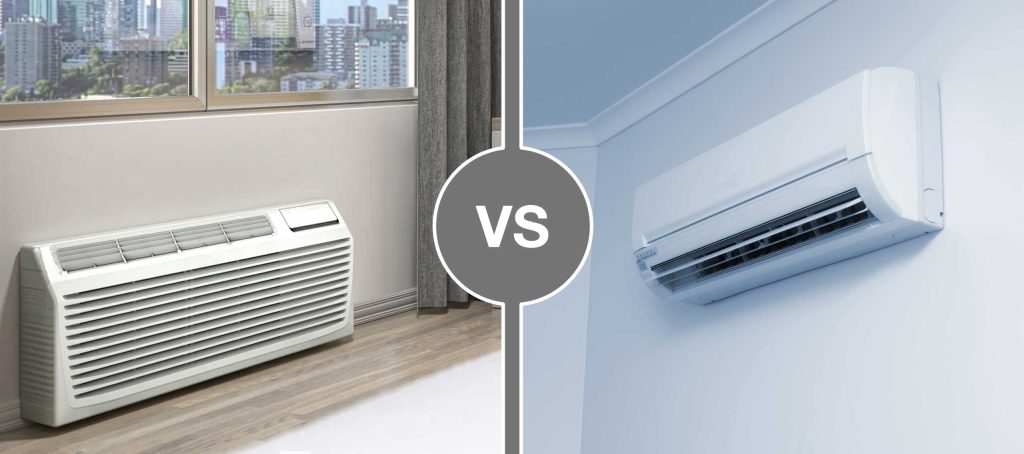
A split system is generally more efficient than a packaged system, but the overall efficiency relies on a well-sized and operating duct system. Mini-splits are commonly preferred in residential settings due to their higher SEER ratings and lower long-term operating costs compared to PTACs.
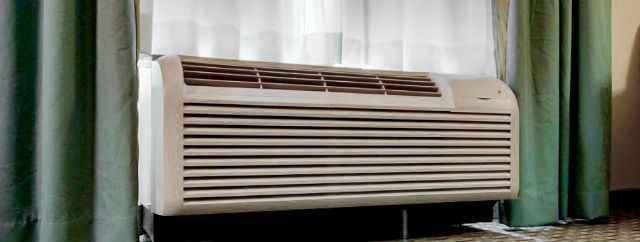
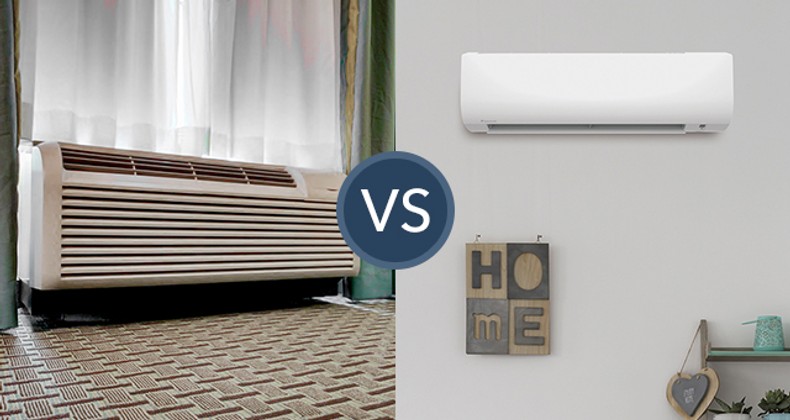
Packaged units have disadvantages such as susceptibility to weather damage and the need for regular inspection and maintenance. PTAC units are not as efficient or quiet as other home cooling options, making them less ideal for whole-home comfort. Mini-splits consist of two smaller units, while PTACs are bulkier and more difficult to handle.
Credit: www.sylvane.com
Efficiency
When comparing the efficiency of Packaged Terminal Air Conditioners versus Mini Split systems, it’s generally easier to achieve higher efficiency with the latter. Mini-splits offer higher SEER ratings and greater energy efficiency, making them a cost-effective long-term solution, especially in the residential market.
Additionally, Mini-splits are more efficient and quieter than PTAC units.
Higher Efficiency Ratings Of Split Systems
Split systems offer higher efficiency ratings compared to packaged units. This is due to various factors such as the design and installation of split systems, which are specifically engineered to provide optimal energy efficiency. The higher efficiency ratings of split systems ensure that you can enjoy cost-effective cooling and heating while minimizing energy consumption.Energy Efficiency Of Mini Splits
Mini splits, in particular, excel in energy efficiency. These systems often come with high seasonal energy efficiency ratio (SEER) ratings, which indicate their efficiency in cooling. With SEER ratings typically ranging from 16 to 22, mini splits outperform packaged terminal air conditioners (PTACs) in terms of energy efficiency. By using innovative technologies and advanced compressor designs, mini splits achieve greater cooling efficiency while consuming less energy.Comparing Efficiency
To better understand the energy efficiency of mini splits and PTACs, let’s compare them side by side:| Mini Splits | PTACs |
|---|---|
| High SEER ratings (16-22) | Lower SEER ratings (10-14) |
| Inverter technology maximizes energy efficiency | Traditional compressor design |
| Zoned cooling allows for precise temperature control | Single-room cooling with limited control |
| Quieter operation | Potentially louder operation |
Installation
When considering between a Packaged Terminal Air Conditioner (PTAC) and a Mini Split system, the latter is generally more energy-efficient with higher SEER ratings. Mini Splits offer lower long-term operating costs compared to PTACs, making them a popular choice for residential cooling solutions.
Easy Installation Of Ptac
Installing a Packaged Terminal Air Conditioner (PTAC) is straightforward and does not require complex procedures.
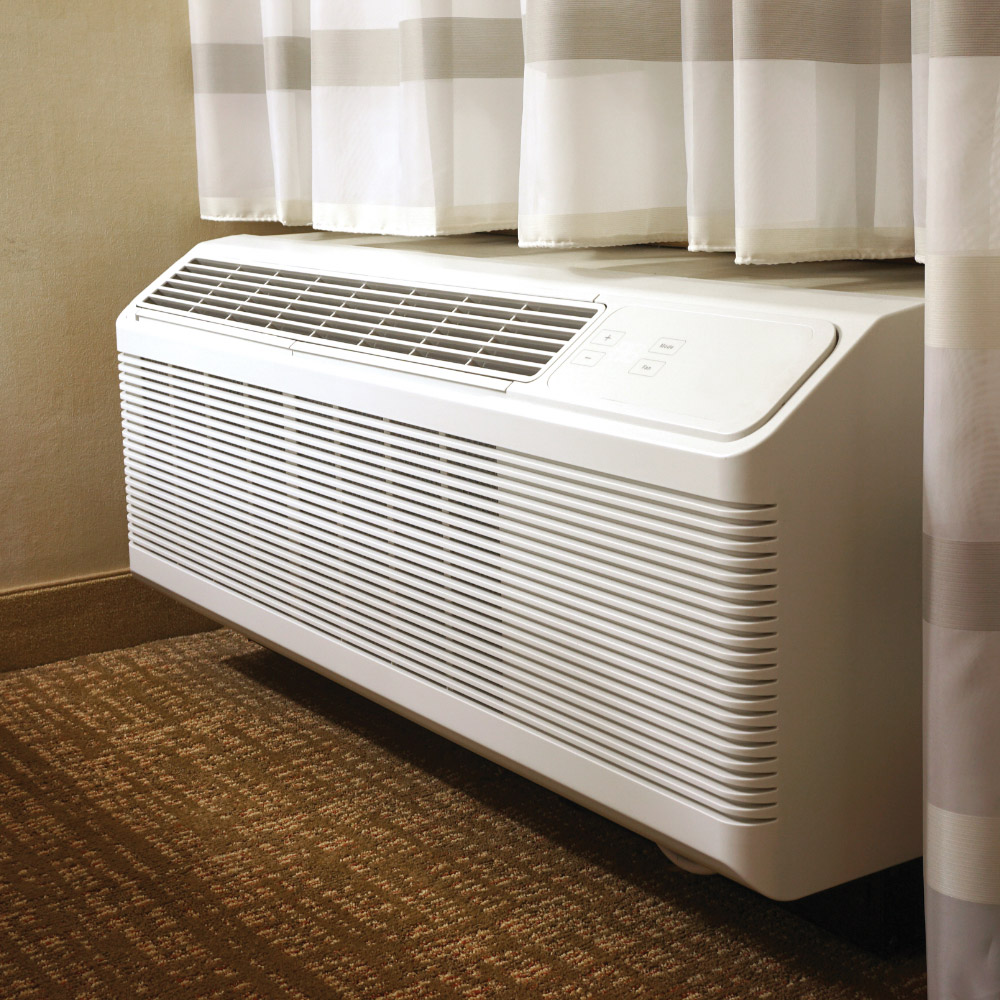
With a PTAC unit, you can typically mount it through the wall or in a window, connect it to the electrical supply and the existing venting system, making it a quick and hassle-free process.
Complex Installation Of Mini Split Systems
On the other hand, installing a mini-split system can be more intricate and time-consuming compared to PTAC units.
Mini split systems involve setting up both indoor and outdoor units, ensuring proper placement, refrigerant lines connection, and electrical wiring, which requires professional expertise.
Cost
When considering the cost aspect of Packaged Terminal Air Conditioners (PTAC) versus Mini Split systems, it’s crucial to evaluate both the upfront costs and the long-term operating costs.
Comparison Of Upfront Costs
Before making a decision, analyzing the upfront costs of PTAC and Mini Split systems is essential. Here’s a brief comparison:
| Upfront Costs | PTAC | Mini Split |
|---|---|---|
| Equipment and Installation | Generally lower initial cost | Usually higher initial cost |
| Accessories and Additional Components | May require fewer additional components | May require more accessories and components |
| Overall Installation Complexity | Less complex installation | Often more complex installation |
Long-term Operating Cost Analysis
When assessing the long-term operating costs, there are a few considerations to keep in mind:
- Energy Efficiency: Mini Split systems tend to offer higher energy efficiency compared to PTAC units, resulting in potential long-term cost savings on energy bills.
- Maintenance: PTAC units may require more frequent maintenance due to their outdoor placement, potentially leading to higher long-term maintenance costs.
- Noise and Comfort: Mini Split systems are generally quieter and provide better temperature control, potentially contributing to increased long-term comfort and satisfaction, offsetting their higher initial cost.
Credit: www.homedepot.com
Maintenance
Maintenance is an essential aspect that directly impacts the performance and lifespan of air conditioning systems. Whether it’s a packaged terminal air conditioner (PTAC) or a mini-split system, regular maintenance is crucial to ensure optimal functionality and energy efficiency. Let’s delve into the specific maintenance considerations for both types of air conditioning units.
Regular Maintenance Requirements Of Packaged Units
PTAC units have specific maintenance requirements to ensure their longevity and efficiency. Proper and regular maintenance can also help prevent potential breakdowns and costly repairs. Here are the key maintenance tasks for packaged units:
- Cleaning: Regular cleaning of the filters, coils, and vents is critical to maintaining the airflow and efficiency of PTAC units. Clogged or dirty filters can impede airflow and decrease the system’s overall performance.
- Inspections: Periodic inspections of the exterior components, such as the condenser and evaporator coils, to check for any signs of wear and tear, corrosion, or damage.
- Condensate Drain Maintenance: Ensuring the condensate drain is clean and free from any blockages is essential for preventing water leakage and maintaining proper humidity control.
- Professional Servicing: It’s advisable to schedule annual professional servicing to thoroughly inspect and address any potential issues with the PTAC unit.
Maintenance Considerations For Mini Splits
Mini-split air conditioning systems also require regular maintenance to ensure their efficient operation and longevity. Here are the key maintenance considerations for mini splits:
- Cleaning and Dusting: Regularly cleaning and dusting the indoor unit’s filters and outdoor condenser is crucial to maintain optimal airflow and energy efficiency.
- Inspecting for Refrigerant Leaks: Periodic inspections for refrigerant leaks are essential to prevent potential performance issues and ensure the system operates at peak efficiency.
- Inspecting Insulation and Seals: Checking the insulation and seals around the indoor and outdoor units to ensure they are intact and properly sealed to prevent energy loss.
- Professional Maintenance: Annual professional maintenance by certified technicians can help identify and address any potential issues early on, ensuring the system’s longevity and efficiency.
Durability
When comparing a Packaged Terminal Air Conditioner (PTAC) and a Mini Split, durability is a crucial factor to consider. While both options have their advantages, mini splits generally offer higher energy efficiency and longevity due to their higher SEER ratings and durable construction.
Weather Resistance Of Ptac Units
PTAC units are designed to withstand varying weather conditions due to their outdoor installation.
Susceptibility To Damage In Mini Splits
Mini split systems are more prone to damage as the outdoor unit is exposed to external elements.
Noise Level
When it comes to choosing between a Packaged Terminal Air Conditioner (PTAC) and a Mini Split system, noise level is an important factor to consider. Nobody wants to be disturbed by a loud and bothersome air conditioning unit, especially when trying to relax or sleep. In this section, we will discuss the quiet operation of PTAC units and the noise concerns associated with mini split systems.
Quiet Operation Of Ptac Units
PTAC units are known for their quiet operation. They are designed to minimize noise and provide a peaceful environment. The noise level of a PTAC unit is typically low, allowing you to enjoy your indoor space without any distractions. This makes PTAC units a popular choice for hotels, hospitals, and residential settings where peace and quiet are paramount.
One of the reasons PTAC units are quieter is because the compressor and condenser fan are located outside the room. This means that the most noise-producing components are positioned away from the area where you spend your time. As a result, you can relax and enjoy a quiet and comfortable atmosphere without any disturbance from the air conditioning unit.
Noise Concerns With Mini Split Systems
While mini split systems offer various benefits, noise can be a concern for some users. Mini split systems consist of both an indoor and outdoor unit. The indoor unit is responsible for blowing air into the room, while the outdoor unit houses the compressor and condenser fan.
Unfortunately, the noise of the compressor and condenser fan of a mini split system can be audible, especially if the unit is installed near a quiet area. This can be an issue for those who are particularly sensitive to noise or live in areas where noise restrictions are enforced. Additionally, if the outdoor unit is installed close to a bedroom or living room window, the noise can potentially disrupt your sleep or daily activities.
It is important to note that noise levels may vary between different brands and models of mini split systems. Some manufacturers offer quieter units with advanced noise reduction technology.
To minimize noise concerns with mini split systems, proper installation and maintenance are key. Ensuring that the unit is installed by a qualified professional and regularly serviced can help reduce noise levels. Additionally, selecting a location for the outdoor unit that is away from areas where noise is a concern can significantly improve the overall experience.
Ultimately, it is crucial to consider your specific noise sensitivity and the environment in which the air conditioning unit will be installed when deciding between a PTAC unit and a mini split system.
Flexibility And Zone Control
Ability to cool multiple rooms with mini splits
Mini splits offer the flexibility to cool multiple rooms individually, providing zone control for enhanced comfort.
Limitations Of Ptac Units For Whole-home Comfort
PTAC units are not suitable for whole-home comfort as they lack the ability to provide zone cooling and individual room control.
Credit: www.sylvane.com
Frequently Asked Questions On Packaged Terminal Air Conditioner Vs Mini Split
Which Is Better A Split System Or A Package Unit System?
A split system is generally better than a package unit because it offers higher efficiency ratings. However, a well-sized and operating duct system is crucial for optimal performance. Mini-splits also have higher energy efficiency and lower long-term operating costs compared to packaged units.
Which Is Better A Mini-split Or A Ptac?
Mini-splits are better than PTACs due to higher energy efficiency and lower long-term operating costs.
What Are The Disadvantages Of A Packaged Air Conditioner?
Packaged air conditioners may be more susceptible to weather damage and need regular maintenance. They are less energy-efficient and not as quiet as other cooling options. Additionally, the outdoor components can attract rust and small animals. Regular inspection is essential to address these issues.
What Are The Cons Of Ptac?
PTAC units may not be suitable for whole-home cooling and may lack efficiency and noise control compared to other options.
Conclusion
Considering the efficiency and cost factors, mini-split systems emerge as a preferable option over PTAC units. While PTACs may offer lower upfront costs, mini-splits provide greater energy efficiency in the long run. Make an informed decision based on your specific requirements for optimal heating and cooling solutions.