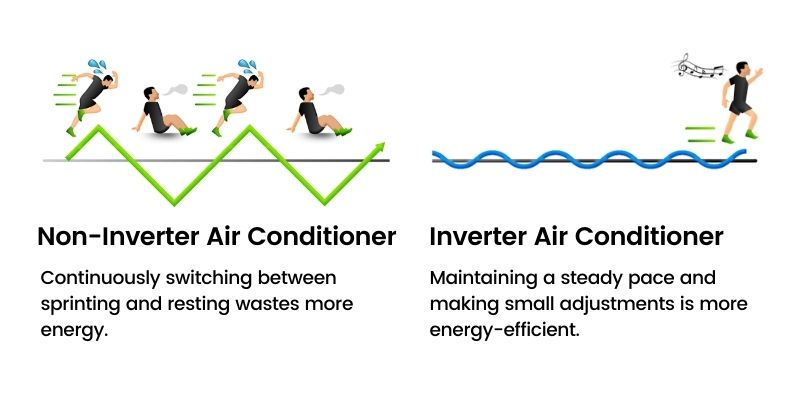
The main difference between an inverter and non-inverter air conditioner lies in their compressor speed, with an inverter AC having a variable speed compressor and a non-inverter AC having a fixed speed compressor. Inverter ACs are more energy efficient and operate more quietly and smoothly than non-inverter ACs.
They also offer more precise and consistent cooling, while consuming less power and saving more money in the long run. On the other hand, non-inverter ACs tend to be less expensive upfront. However, the higher initial cost of inverter ACs is offset by their energy-saving benefits over time.
Ultimately, the choice between inverter and non-inverter ACs depends on individual needs, budget, and energy efficiency priorities.
Understanding Inverter Air Conditioners
Understanding the difference between inverter and non-inverter air conditioners is crucial. Inverter ACs have variable speed compressors, making them more energy-efficient and quieter compared to non-inverter ACs with fixed speed compressors. Inverter ACs also offer precise and consistent cooling while consuming less power, ultimately saving on energy costs.
How Inverter Acs Work
An inverter air conditioner works by adjusting the speed of the compressor motor to control the temperature more effectively. The variable speed compressor allows the AC to regulate the refrigerant flow and maintain the desired room temperature efficiently.
Advantages Of Inverter Acs
- Energy Efficiency: Inverter ACs consume less power by adjusting compressor speed based on the cooling needs, resulting in lower energy bills.
- Consistent Cooling: These ACs provide more precise and steady cooling compared to non-inverter models, ensuring comfort throughout the day.
- No Power Surges: The gradual cooling process of inverter ACs eliminates sudden power surges, extending the lifespan of the unit.
- Quieter Operation: Inverter ACs operate more quietly due to the variable speed compressor, reducing noise levels in your living space.
Understanding Non-inverter Air Conditioners
How Non-inverter Acs Work
Non-inverter air conditioners operate with a fixed speed compressor, which means that once they are turned on, the compressor runs at full capacity until the set temperature is reached, and then shuts off completely.
When the temperature in the room rises again, the compressor turns back on at full capacity, and the cycle continues repeatedly. This on-off cycle results in fluctuations in the room temperature and consumes more energy than necessary.
Advantages Of Non-inverter Acs
- Cost-Effective: Non-inverter ACs are generally more affordable compared to their inverter counterparts.
- Low Maintenance: With fewer moving parts, non-inverter ACs often require less maintenance.
- Simple Technology: The basic design of non-inverter ACs makes them easier to understand and repair.
Energy Efficiency
When it comes to choosing between an inverter air conditioner and a non-inverter air conditioner, one of the essential factors to consider is energy efficiency. Understanding the energy consumption and potential savings on electricity bills can help make an informed decision when investing in an air conditioning system for your home or office.
Comparison Of Energy Consumption
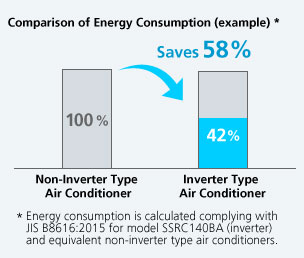
The key difference between inverter and non-inverter air conditioners lies in their compressor operation. Inverter air conditioners utilize a variable-speed compressor, whereas non-inverter air conditioners rely on a fixed-speed compressor. This compressor difference directly impacts energy consumption. Inverter air conditioners adjust their speed based on the cooling requirement, consuming only the necessary amount of electricity. On the other hand, non-inverter air conditioners operate at a constant speed, leading to higher energy consumption even when the cooling demand is low.
Savings On Electricity Bills
Choosing an inverter air conditioner over a non-inverter model can result in substantial savings on electricity bills. The energy-efficient operation of inverter air conditioners leads to reduced power consumption, ultimately translating into lower electricity costs. With its ability to regulate cooling capacity based on the specific needs of the space, an inverter air conditioner can provide efficient cooling while consuming less energy, leading to significant long-term savings on electricity bills.
Credit: www.quora.com
Temperature Control
Inverter Air Conditioners and Non-Inverter Air Conditioners operate differently when it comes to temperature control.
Consistent Cooling Of Inverter Acs
Inverter ACs maintain consistent cooling by adjusting the compressor speed based on the room’s temperature requirements.
Fixed Temperature Output Of Non-inverter Acs
Non-Inverter ACs provide fixed temperature output without adjusting the compressor speed, leading to fluctuations in room temperature.
Noise And Vibration
When it comes to noise and vibration, the main difference between an inverter air conditioner and a non-inverter air conditioner lies in their compressor technology. An inverter AC has a variable speed compressor, making it more energy efficient and quieter than a non-inverter AC with a fixed speed compressor.
Quiet Operation Of Inverter Acs
One of the major advantages of inverter air conditioners is their quiet operation. Unlike non-inverter ACs, which can be quite noisy, inverter ACs are designed to operate silently, providing a peaceful environment for your home or office.
The secret behind this quiet operation lies in the variable speed compressor of the inverter AC. Instead of constantly running at full speed like non-inverter ACs, the compressor of an inverter AC adjusts its speed according to the cooling requirements of the room. This not only helps in maintaining a consistent and comfortable temperature but also reduces noise and vibration levels.
With their silent operation, inverter ACs ensure that you can enjoy a noise-free and uninterrupted sleep or work environment. Whether it’s in your bedroom, living room, or office space, inverter ACs offer the perfect cooling solution without any unwanted disturbances.
Noisy Operation Of Non-inverter Acs
On the other hand, non-inverter air conditioners are notorious for their noisy operation. These ACs use fixed-speed compressors, which means they run continuously at a single speed regardless of the cooling requirements. This continuous running results in higher noise levels and vibrations, creating an unpleasant atmosphere in your living or working space.
The constant on-off cycle of non-inverter ACs also contributes to their noisy operation. As the compressor turns on and off frequently to maintain the desired temperature, it creates a disruptive sound that can be quite bothersome, especially in quiet environments.
Moreover, non-inverter ACs tend to produce more vibration due to their fixed-speed compressor and on-off cycling. This vibration can be felt throughout the room and can even cause damage to certain delicate items or surfaces.
It’s important to note that the noise and vibration levels of non-inverter ACs can vary depending on the brand and model. However, in general, compared to inverter ACs, non-inverter ACs are less efficient in reducing noise and vibration, leading to a less comfortable and peaceful environment.

Credit: m.youtube.com
Durability And Lifespan
When comparing inverter air conditioners to non-inverter air conditioners, durability and lifespan are important factors to consider. Inverter air conditioners generally have a longer lifespan due to their variable speed compressor, which reduces wear and tear on the components and extends the overall lifespan of the unit.
Non-inverter air conditioners, on the other hand, have a fixed speed compressor and may experience more frequent breakdowns and require more frequent maintenance.
Durability and Lifespan When determining the efficiency of air conditioners, considering durability and lifespan is essential. Let’s delve into the longevity of inverter air conditioners versus the shorter lifespan of non-inverter air conditioners.Longevity Of Inverter Acs
Inverter air conditioners are engineered with advanced technology that allows the compressor to operate at varying speeds, resulting in reduced wear and tear on the system. This variable-speed operation ensures that the compressor does not have to start and stop frequently, leading to longer durability.Shorter Lifespan Of Non-inverter Acs
Conversely, non-inverter air conditioners typically have a fixed-speed compressor that constantly starts and stops, putting strain on the system and causing it to wear out more quickly. This frequent cycling can lead to a shorter lifespan compared to inverter air conditioners. Inverter air conditioners have a longer lifespan due to their ability to operate more efficiently and with less strain on the system. This results in reduced maintenance and repair costs over time, making them a more economical and durable choice for cooling your space. In conclusion, when it comes to durability and lifespan, inverter air conditioners clearly outperform non-inverter air conditioners, offering a longer-lasting and more reliable cooling solution.Cost Comparison
Cost Comparison:
Initial Cost Of Inverter Acs
When purchasing, inverter ACs have a higher upfront cost compared to non-inverter models. However, their energy efficiency and performance make them a worthwhile investment in the long run.
Long-term Savings Of Inverter Acs
Inverter ACs can lead to substantial long-term savings due to their energy-efficient operation. With lower power consumption and reduced electricity bills, inverter ACs prove to be a cost-effective choice over time.
Credit: www.daikin.com
Frequently Asked Questions Of Inverter Air Conditioner Vs Non-inverter Air Conditioner
Which Is Better Inverter Ac Or Non-inverter Ac?
Inverter ACs are more energy-efficient and provide precise cooling compared to non-inverter ACs.
What Is The Disadvantage Of Inverter Ac?
The disadvantage of inverter AC is that an underpowered unit may consume higher power resulting in increased bills. Proper insulation is essential for maximum efficiency. Inverter ACs may also be costlier initially compared to non-inverter models. However, they offer long-term energy savings.
Is It Air Conditioner With An Inverter Better?
Yes, an air conditioner with an inverter is better because it is more energy-efficient and provides precise and consistent cooling. Inverter ACs consume less power, run quieter, and save more money compared to non-inverter ACs.
What Is The Advantage Of Inverter Ac Over Normal Ac?
Inverter ACs provide more precise cooling, consume less power, save money, and operate quietly compared to normal ACs.
Conclusion
When deciding between inverter and non-inverter air conditioners, consider energy efficiency and cost savings. Inverter ACs offer variable speed compressors for better efficiency, while non-inverter ACs have fixed speed compressors. Make an informed choice based on your specific cooling needs and budget.