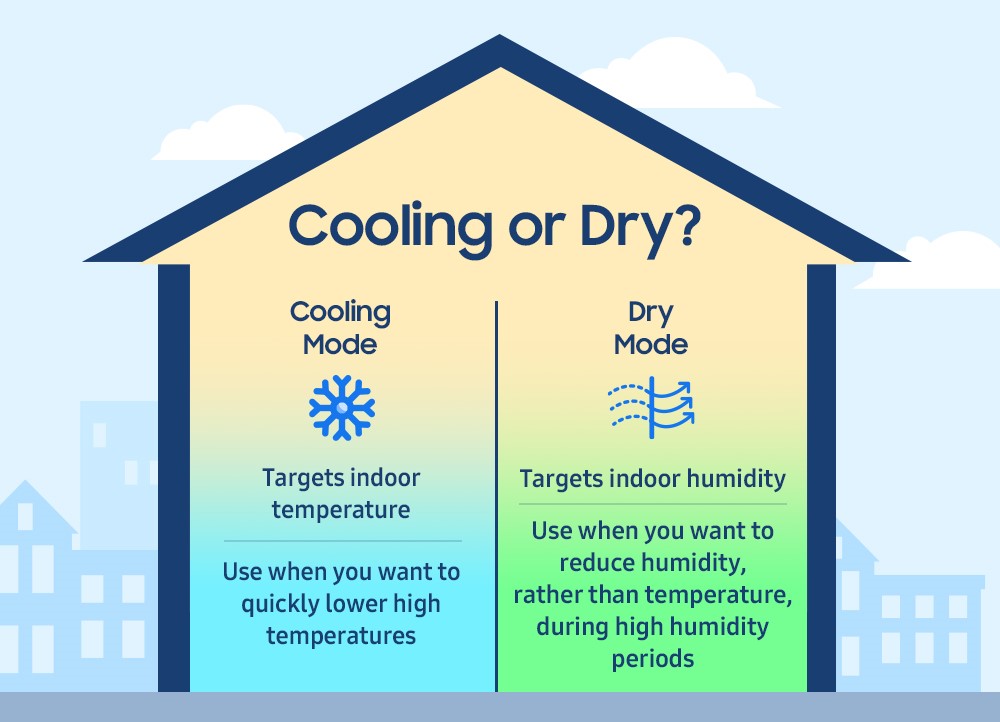
Dry mode is ideal for humid conditions, while cooling mode is better for hot summer days. Understanding when to use each mode is key to optimizing your air conditioner’s performance.
Dry mode is effective in removing excess moisture from the air, making it suitable for sticky and humid weather. In contrast, cooling mode is designed to lower the temperature by removing heat from the air. Whether you should use dry or cool mode depends on the humidity levels and temperature in your area.
By choosing the right mode at the right time, you can ensure comfortable and efficient cooling for your space.
Credit: www.newair.com
Advantages Of A Dry Air Conditioner
Removes Moisture From The Air
Dry air conditioners are designed to remove excess moisture from the air, creating a more comfortable indoor environment.
Prevents Mold And Mildew Growth
The low humidity levels maintained by a dry air conditioner help in preventing the growth of mold and mildew in your living space.
Reduces Humidity-related Discomfort
By reducing humidity levels, a dry air conditioner effectively minimizes discomfort caused by sticky and clammy conditions.

Credit: www.crownpower.com.au
Disadvantages Of A Dry Air Conditioner
Not Suitable For Hot Summer Days
Dry mode is ideal when the conditions are humid and “sticky” and temperatures are not too hot, for example, on days when the weather has a tropical feel, and it’s been raining or about to rain. However, this mode won’t perform well on hot summer days — switch to cooling mode at these times.
May Result In Excessively Dry Air
If your air conditioner is especially good at extracting humidity, using dry mode for several hours could leave you with an insufficient amount of indoor moisture. Having excessively dry air in your house can cause uncomfortable symptoms. Excessively dry air can also result in static electricity.
Advantages Of A Cool Air Conditioner
Mode dehumidifies the air, making it ideal for humid and sticky conditions. However, on hot summer days, it is recommended to switch to cooling mode to effectively remove heat from the air and deliver cool air to the room. Dry mode uses less electricity than the standard cooling mode, resulting in energy savings.
Provides Effective Cooling
A cool air conditioner offers efficient cooling by regulating the indoor temperature, providing a comfortable environment even during scorching heat.
Suitable For Hot Summer Days
In hot summer days, a cool air conditioner becomes indispensable, ensuring a refreshing and cool atmosphere inside homes or offices.

Credit: hvacsantaclarita.net
Disadvantages Of A Cool Air Conditioner
A cool air conditioner can cause dryness in the air, leading to discomfort and potential health issues such as drying out the skin and respiratory problems. It may also require more maintenance to prevent mold and mildew growth due to reduced moisture levels.
Does Not Dehumidify As Effectively As A Dry Air Conditioner
Cool air conditioners do not effectively remove moisture from the air compared to dry air conditioners.
Less Efficient In Reducing High Humidity Levels
Cool air conditioners may struggle to maintain comfortable indoor humidity levels in extremely moist conditions.
Can Lead To Discomfort Due To Residual Moisture
Inadequate dehumidification by cool air conditioners can leave the air feeling damp, leading to discomfort.
Which Is Better: Dry Or Cool Air Conditioner?
The debate between dry and cool air conditioners has been a long-standing discussion among homeowners. Understanding which is better for your specific needs can help you make an informed decision. In this article, we will explore the advantages and considerations of both dry and cool air conditioners, providing insights into which option may be more suitable for you.
Depends On Humidity Levels And Temperature
The most significant factor in determining whether a dry or cool air conditioner is better for you is the humidity levels and temperature in your area. Dry mode is ideal when the weather is humid and sticky, and temperatures are moderate. It works best on days when there is a tropical feel or when it has been raining or about to rain. However, on extremely hot summer days, when temperatures are high, switching to the cooling mode ensures more effective cooling.
Considerations For Energy Efficiency
Energy efficiency is a crucial consideration when it comes to choosing between a dry or cool air conditioner. In terms of energy consumption, dry mode has an advantage. It uses less electricity than the standard cooling mode since the entire system operates at a slower pace. This results in reduced energy consumption by individual components, leading to potential savings on your utility bills.
- Dry mode consumes less electricity compared to cool mode.
- Slower system operation leads to energy savings.
- Potential reduction in utility bills.
On the other hand, cool mode is specifically designed to remove heat from the air and deliver cool air to the room. While it may consume slightly more energy than dry mode, it provides effective cooling during hot summer days. If your priority is maximum cooling performance, cool mode is the better option.
Frequently Asked Questions Of Dry Vs Cool Air Conditioner
Is Cool Or Dry Mode Better For Ac?
Dry mode is better for humid conditions, especially when it’s not too hot. Use cooling mode on hot summer days.
Is It Bad To Leave Ac On Dry Mode?
Using AC on dry mode is not bad. It is ideal in humid conditions with moderate temperatures. However, using it for prolonged periods can make the indoor air too dry, causing discomfort and static electricity. It is recommended to switch to cooling mode on hot summer days.
Dry mode also consumes less electricity compared to cooling mode.
Is It Okay To Use Dry Mode All Day?
Dry mode is ideal for humid and sticky conditions, but not suitable for hot summer days. It removes moisture from the air and uses less electricity than the cooling mode. However, using it all day may result in excessively dry air, causing discomfort and static electricity.
It’s best to switch to cooling mode during hot weather.
Does Dry Mode Use Less Electricity Than Cool Mode?
Dry mode uses less electricity than cool mode since the system operates more slowly, resulting in energy savings.
Conclusion
When deciding between dry and cool modes for your AC, consider the humidity levels and temperatures. Dry mode is ideal for humid days, while cool mode works better on hot days. Understanding the differences can help you optimize your AC usage effectively.
Choose the mode that suits the weather conditions best.