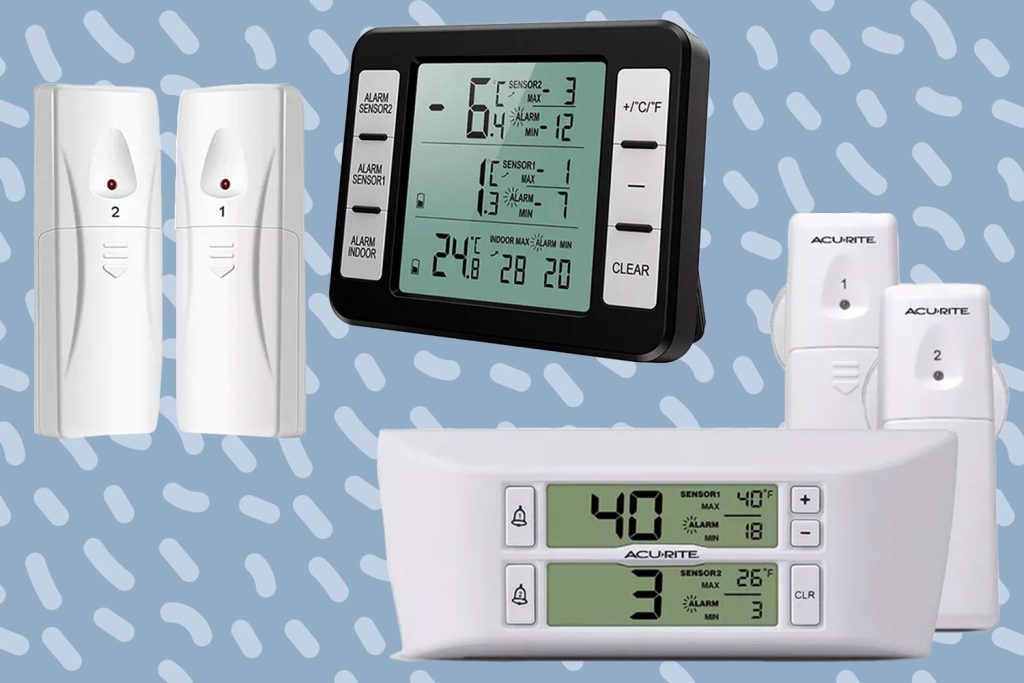
The best refrigerator thermometer ensures accurate temperature monitoring for optimal food safety and storage. With its precise measurements, it allows you to maintain the ideal temperature and prevent spoilage or bacteria growth.
Invest in a reliable refrigerator thermometer to ensure the freshness and quality of your food items. By regularly checking and adjusting the temperature, you can prolong the shelf life of your groceries and reduce the risk of foodborne illnesses. A refrigerator thermometer is a simple yet essential tool that every household should have to maintain a safe and healthy environment for their food storage needs.
:max_bytes(150000):strip_icc()/new-version-amir-refrigerator-thermometer-wireless-indoor-outdoor-thermometer-sensor-temperature-monitor-with-audible-alarm-temperature-gauge-for-freezer-kitchen-home-battery-not-included-e9570e65cd2b4af699ce3a30831df619.jpg)
Credit: www.thespruceeats.com
Importance Of Refrigerator Thermometers
Refrigerator thermometers play a vital role in ensuring food safety by accurately monitoring temperature levels. Find the best refrigerator thermometer to maintain freshness and prevent spoilage.
Proper temperature control is vital for preserving the quality and safety of the food stored in your refrigerator. This is where refrigerator thermometers come into play. By providing accurate temperature readings, these small but mighty devices play a crucial role in maintaining optimal conditions for your perishable items. In this article, we will explore the significance of refrigerator thermometers in terms of food safety and energy efficiency.
Food Safety
Maintaining the right temperature inside your refrigerator is key to ensuring the safety of the food you consume. Refrigerator thermometers are essential tools that help you monitor the temperature and prevent your food from being exposed to harmful bacteria. According to the Food and Drug Administration (FDA), perishable food items should be stored at a temperature of 40°F (4°C) or below. Any higher temperature could promote the growth of bacteria, leading to foodborne illnesses. By using a refrigerator thermometer, you can easily monitor the temperature and make adjustments if necessary, providing added protection for you and your family.
Energy Efficiency
Did you know that maintaining the optimal temperature in your refrigerator can also contribute to energy efficiency? When your refrigerator is set at the ideal temperature, it operates more efficiently, reducing energy consumption and prolonging the lifespan of the appliance. Refrigerator thermometers enable you to keep track of the internal temperature, ensuring that it remains within the recommended range. By avoiding unnecessarily low temperatures, you can save energy, reduce your electricity bills, and decrease your carbon footprint. Moreover, a well-functioning refrigerator uses less energy, which benefits both the environment and your wallet.
Key Features To Look For
When looking for the best refrigerator thermometer, it’s essential to consider the key features that ensure accurate temperature monitoring and reliable performance. The following key features should be prioritized to make an informed decision about the refrigerator thermometer.
Accuracy
The accuracy of a refrigerator thermometer is crucial for maintaining the safe storage of perishable items. Look for a thermometer with high precision and minimal margin of error to ensure proper temperature monitoring.
Temperature Range
Ensure the thermometer has a wide temperature range suitable for both refrigeration and freezing purposes. A broader temperature range enables monitoring in various storage conditions, ensuring that the thermometer is versatile and adaptable to different needs.
Display
Look for a thermometer with a clear and easy-to-read display. An intuitive and well-organized display makes it convenient to monitor the temperature at a glance, ensuring that the information is readily accessible and comprehensible.
Top Picks For Refrigerator Thermometers
Keeping your refrigerator at the optimal temperature is crucial for maintaining the freshness and quality of your food. A reliable refrigerator thermometer is a must-have tool to ensure your food stays safe to consume and to prevent any food spoilage. In this article, we have curated a list of the top picks for refrigerator thermometers, including the best digital and wireless options. Let’s take a closer look.
Digital Refrigerator Thermometer
When it comes to accuracy and ease of use, a digital refrigerator thermometer is a fantastic choice. These thermometers offer a clear digital display that allows you to monitor the temperature in your refrigerator with just a glance. They are also typically equipped with alarms or alerts to notify you if the temperature goes above or below the desired range.
Benefits of Digital Refrigerator Thermometers:
- Accurate temperature readings.
- Easy-to-read digital display.
- Alarms or alerts for temperature fluctuations.
- Compact and portable.
Wireless Refrigerator Thermometer
For those who want the convenience of monitoring their refrigerator’s temperature without having to open the door, a wireless refrigerator thermometer is an excellent option. These thermometers use wireless technology to transmit the temperature data to a separate display unit or your smartphone. This enables you to check the temperature from a distance, ensuring accurate readings without disrupting the refrigerator’s internal environment.
Benefits of Wireless Refrigerator Thermometers:
- Remote temperature monitoring.
- Eliminates the need to open the refrigerator door.
- Real-time temperature updates.
- Convenient and user-friendly.
Whether you opt for a digital refrigerator thermometer for its accuracy and simplicity or a wireless refrigerator thermometer for its remote monitoring capabilities, investing in a reliable refrigerator thermometer is definitely a wise decision. With the help of these top picks, you can ensure that your fridge maintains the optimal temperature and keeps your food fresh and safe to consume.
Conclusion
Don’t let an incorrect refrigerator temperature compromise the safety and quality of your food. Choose one of these top picks for refrigerator thermometers and enjoy peace of mind in knowing that your food is stored at the optimal temperature. Whether you go for a digital thermometer or a wireless thermometer, rest assured that you are taking an essential step towards food safety and maintaining the freshness of your perishable items. Get one today and take control over your refrigerator’s temperature!
How To Use A Refrigerator Thermometer
Place the refrigerator thermometer in the central area of the fridge shelf for an accurate reading.
Keep the temperature between 37-40°F to ensure food safety and freshness.
Benefits Of Using A Refrigerator Thermometer
Benefits of Using a Refrigerator ThermometerWhen refrigerating your food, accurately monitoring the temperature is crucial. By using a refrigerator thermometer, you can maintain food safety and quality effectively.
Preventing Food Spoilage
Incorrect temperature in your refrigerator can lead to bacterial growth and food spoilage.
- Refrigerator thermometer helps in ensuring the temperature is consistently below 40°F.
- It aids in spotting temperature fluctuations that may endanger the freshness of your food items.
Preserving Food Quality
Maintaining the right temperature with a thermometer can extend the shelf life of your food.
- Preserves the nutritional value and taste of your food products.
- Prevents freezer burn by maintaining optimal temperature levels.
Credit: www.nytimes.com
Maintenance And Care Tips
Discover the ultimate maintenance and care tips for your refrigerator thermometer. Keep your food fresh and safe with expert guidance on proper calibration, cleaning, and placement. Learn how to maximize the efficiency of your refrigerator and ensure accurate temperature monitoring for optimal preservation.
Maintenance and Care Tips: Battery Replacement: To ensure accurate temperature readings from your refrigerator thermometer, it is essential to replace the battery periodically. Follow these simple steps to replace the battery in your thermometer. 1. Remove the battery cover: Locate the battery cover on the back of the thermometer and gently slide it open. 2. Take out the old battery: Carefully remove the old battery by pushing it out from its compartment. Dispose of the old battery properly. 3. Insert the new battery: Insert a fresh battery into the compartment, ensuring that the positive (+) and negative (-) ends are correctly aligned. 4. Close the battery cover: Slide the battery cover back into place until it clicks securely. Cleaning: Keeping your refrigerator thermometer clean is crucial for accurate temperature readings and overall performance. Follow these cleaning tips to keep your thermometer in top shape. 1. Unplug the thermometer: Before cleaning the thermometer, always unplug it from the refrigerator for safety reasons. 2. Wipe with a damp cloth: Use a soft, damp cloth or sponge to gently wipe the surface of the thermometer, removing any dirt or residue. 3. Avoid harsh chemicals: Do not use abrasive cleaners or harsh chemicals on the thermometer, as they can damage the display or affect its accuracy. 4. Dry thoroughly: After cleaning, make sure to dry the thermometer thoroughly before plugging it back into the refrigerator. Additional Care Tips: – Regularly check your refrigerator thermometer’s display for any signs of damage or malfunction. If you notice anything unusual, contact the manufacturer for assistance. – Avoid exposing the thermometer to excessive heat or extreme cold, as it can affect its accuracy. – If your thermometer has a probe, be careful when inserting it into food or liquids to prevent any damage. – Store the thermometer in a safe place when not in use, away from direct sunlight or moisture. Keeping your refrigerator thermometer well-maintained and clean is vital for accurate temperature readings, ensuring the safety and freshness of your food. Remember to regularly replace the battery and clean the thermometer to optimize its performance and reliability.Expert Tips For Efficient Monitoring
When it comes to ensuring your refrigerator is operating at the optimal temperature to keep your food safe, a reliable refrigerator thermometer is a must-have tool. Monitoring the temperature inside your fridge and freezer can prevent spoilage and help you avoid food safety issues. In this article, we will provide expert tips for efficient monitoring to help you keep your perishables fresh and safe.
Regular Calibration
Regular calibration of your refrigerator thermometer is essential to ensure accurate temperature readings. Over time, thermometers can drift out of calibration, leading to inaccurate temperature readings. It’s recommended to calibrate your thermometer at least once a year to maintain accuracy. When calibrating, use a glass of ice water to check the reading. If it does not read 32°F (0°C), adjust it accordingly per the manufacturer’s instructions.
Monitoring Freezer Temperature
Monitoring freezer temperature is equally important as the refrigerator, as it is crucial for preserving frozen foods. It is recommended to keep the freezer at 0°F (-18°C) for long-term storage. Regularly check the freezer thermometer readings and adjust the settings if needed to maintain the recommended temperature. In the event of a power outage, the freezer temperature should ideally stay below 40°F (4°C) for maximum food safety.
Conclusion And Final Recommendations
After evaluating the different aspects of refrigerator thermometers, it is crucial to make an informed decision when choosing the right thermometer for your needs. Here are some final recommendations and best practices to ensure the effective monitoring of your refrigerator temperature for food safety and overall functionality.
Choosing The Right Thermometer
- Consider a digital refrigerator thermometer for accurate temperature readings.
- Look for a thermometer with easy-to-read displays and adjustable alarm settings.
- Ensure the thermometer has a wide temperature range suitable for refrigeration purposes.
- Opt for a model with a durable and reliable build to withstand the refrigerator environment.
Best Practices For Monitoring
- Regularly calibrate your thermometer to maintain accuracy.
- Place the thermometer in the warmest spot of the refrigerator for comprehensive monitoring.
- Keep a log of temperature readings to track fluctuations and ensure food safety.
- Replace batteries and conduct regular maintenance to prevent malfunctions.
Credit: www.nytimes.com
Frequently Asked Questions Of Best Refrigerator Thermometer
What Is The Best Type Of Temperature Measuring Device For Use In A Refrigerator?
A digital thermometer with a temperature probe is the best for measuring the temperature inside a refrigerator.
What Is The Best Way To Check Temperature In Refrigerator?
The best way to check the temperature in a refrigerator is to use a refrigerator thermometer. Place the thermometer in the middle of the fridge for accurate readings. Keep the temperature between 34-40°F (1-4°C) to ensure food safety. Regularly check and adjust the settings as needed.
Where Is The Best Place To Put A Thermometer In A Fridge?
The best place to put a thermometer in a fridge is in the middle shelf towards the back.
What Is The Best Practice With Fridge Thermometer?
Maintain fridge thermometer accuracy, place it in the middle, regularly check and calibrate, keep it clean for optimal performance.
Conclusion
A reliable refrigerator thermometer is a crucial tool for maintaining food safety and prolonging the freshness of your perishables. With the wide variety of options available, it is important to choose the best refrigerator thermometer that suits your needs. By monitoring the temperature accurately, you can ensure optimal conditions inside your fridge and avoid food spoilage or bacterial growth.
Don’t compromise on the quality and efficiency of your refrigerator thermometer – invest in a top-rated one today for peace of mind and healthier food storage.