4K TVs offer a resolution of 3840 x 2160 pixels, while 8K TVs offer a resolution of 7680 x 4320 pixels. With the rapid advancement of technology, the television industry has witnessed a significant shift from 4K TVs to 8K TVs.
Both types of TVs have their own strengths and weaknesses, but deciding between them ultimately boils down to personal preferences and budget. 4K TVs, with their resolution of 3840 x 2160 pixels, provide excellent picture quality and detail, delivering a highly immersive viewing experience.
They are widely available and relatively more affordable compared to their 8K counterparts. On the other hand, 8K TVs offer an even more visually stunning experience with their resolution of 7680 x 4320 pixels, bringing unprecedented sharpness and clarity to the screen. However, 8K content is currently limited, and their higher price point makes them less accessible for most consumers. Ultimately, the choice between a 4K and 8K TV depends on your specific needs, preferences, and budget. We will delve deeper into the key differences between 4K and 8K, their advantages and limitations, and whether upgrading to an 8K TV is worth it in today’s market.

Credit: www.whathifi.com
Evolution Of Tv Technology
The Evolution of TV Technology has seen remarkable advancements in picture quality, from the standard definition to high-definition, and now to the era of 4K and 8K resolution. This progression in resolution has significantly enhanced the viewing experience for consumers, offering more lifelike and immersive visuals.
From Hd To 4k
The move from high-definition (HD) to 4K marked a significant leap in television technology. 4K, also known as Ultra High Definition, provides four times the resolution of HD, resulting in sharper images with greater detail and clarity. This advancement allowed viewers to enjoy a more cinematic and immersive experience in the comfort of their own homes.
From 4k To 8k
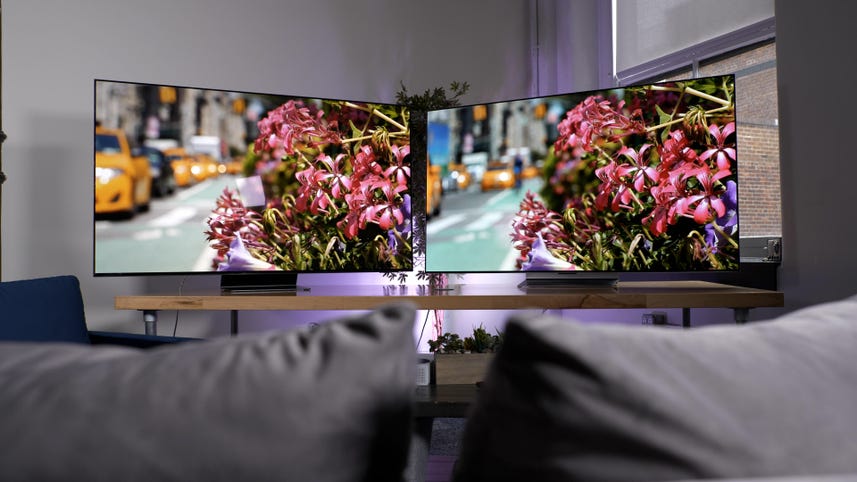
Building upon the foundation set by 4K, the introduction of 8K further elevated the standard for visual fidelity. With four times the pixels of 4K resolution, 8K televisions deliver an unprecedented level of detail and realism, making it ideal for larger screen sizes and closer viewing distances. The enhanced resolution of 8K elevates the viewing experience to a new level, providing a heightened sense of realism and immersion.
Credit: www.cnet.com
Understanding 4k Technology
When it comes to choosing a television, one of the most important decisions you’ll make is selecting the right resolution. Understanding the technology behind different resolutions is crucial in order to make an informed decision. In this section, we will delve into the world of 4K technology and explore its resolution and pixel count, as well as the benefits it offers.
Resolution And Pixel Count
At its core, 4K technology refers to a display resolution with approximately 4,000 pixels horizontally. This means that images and videos displayed on a 4K TV will have four times the number of pixels compared to a standard Full HD TV.
Simply put, more pixels mean greater image quality. With a higher pixel count, details become sharper and more defined, resulting in a more immersive viewing experience. The increased resolution of 4K TVs makes the pictures look incredibly lifelike, with vibrant colors and enhanced clarity.
Benefits Of 4k Tvs
There are several notable benefits associated with 4K TVs. Let’s explore some of the key advantages:
- Enhanced Detail: With four times the resolution of Full HD TVs, 4K TVs provide an unparalleled level of detail. From breathtaking landscapes to intricate textures, every element on the screen becomes incredibly crisp and lifelike.
- Greater Viewing Distance: Thanks to the higher pixel count, 4K TVs allow for a comfortable viewing experience from a greater distance than lower resolution TVs. This means you can enjoy the cinematic experience even in larger rooms.
- Future-Proof: As technology continues to advance, it’s important to future-proof your investments. With 4K TVs becoming increasingly popular, they offer a level of compatibility with other devices that lower resolution TVs cannot match. Whether you’re streaming content or connecting your gaming console, you’ll have access to the highest quality display.
- Rich Colors: 4K technology allows for a wider color gamut, resulting in more vibrant and realistic colors. This means you’ll be able to enjoy your favorite movies, shows, and games with all the splendor they were intended to showcase.
Now that we’ve explored the resolution and pixel count of 4K TVs, as well as the benefits they offer, you can make a more informed decision when choosing your next television. The next section will delve into the exciting world of 8K technology, providing insights into its resolution and the advantages it brings to the table.
Unveiling 8k Technology
8K TVs offer quadruple the resolution of 4K TVs, providing unmatched clarity and detail.
8K technology boasts sharper images, enhanced colors, and improved overall viewing experience.
Comparing Picture Quality
Clarity And Detail
4K TVs offer impressive clarity and detail due to their higher pixel density.
8K TVs, with double the resolution of 4K, provide unparalleled sharpness and detail.
Color Accuracy And Range
Both 4K and 8K TVs boast outstanding color accuracy, offering lifelike and vibrant visuals.
8K TVs surpass 4K in color range, delivering a wider spectrum of colors for a more immersive viewing experience.
Content Availability
Content Availability plays a crucial role when considering the choice between 4K and 8K TVs. With the rapid advancement of technology, the availability of high-quality content becomes an important factor for consumers. In this article, we will explore the content landscape in both 4K and 8K formats, and how the emergence of 8K content is shaping the future of television.
4k Content Landscape
The advent of 4K resolution brought a significant improvement in image quality, offering viewers a more immersive experience. Today, there is a wide range of 4K content available, including movies, TV shows, sports events, and documentaries. Streaming services like Netflix, Amazon Prime, and Disney+ have also embraced 4K, providing a vast library of shows and movies in this format.
Furthermore, major broadcasting networks and cable providers have started to deliver certain programming in 4K, enhancing the viewing experience for their audiences. This growing availability of 4K content encourages consumers to invest in 4K TVs to make the most out of their viewing experience at home.
The Emergence Of 8k Content
While 4K content is becoming increasingly popular, the emergence of 8K content is already on the horizon. As technology advances, content producers are starting to experiment with 8K resolution, offering viewers an even more detailed and immersive visual experience. Although 8K content is scarce at the moment, it is expected to grow steadily in the near future.
Streaming platforms, such as YouTube and Vimeo, have already started supporting 8K videos, allowing content creators to showcase their work in this ultra-high-definition format. Additionally, leading camera manufacturers have released 8K-capable cameras, paving the way for filmmakers and videographers to explore the possibilities of 8K content creation.
While the availability of 8K content is currently limited compared to 4K, it is important to note that 8K TVs are backward compatible. This means that viewers can still enjoy their existing 4K or lower resolution content on these TVs, without sacrificing the quality of their viewing experience.
In conclusion, the content availability for both 4K and 8K TVs is steadily increasing. 4K content is already well-established, with a vast library of movies, shows, and sports events available to viewers. The emergence of 8K content brings the promise of an even more immersive and detailed visual experience, although it is currently in its early stages. By investing in an 8K TV, consumers can future-proof their entertainment setup and stay ahead of the curve as 8K content continues to evolve.

Credit: www.pcmag.com
Practical Considerations
Practical Considerations: When choosing between 4K and 8K TVs, several key factors come into play that can affect your viewing experience and investment. Let’s delve into the Screen Size and Viewing Distance as well as Future-Proofing Investments.
Screen Size And Viewing Distance:
Screen size matters—a larger screen enhances the 8K experience. For optimal viewing, maintain specific distances:
- For 4K: 55-inch screen requires 3.3-5.5 ft viewing distance.
- For 8K: 55-inch screen necessitates 1.6-2.8 ft viewing distance.
Future-proofing Investments:
Investing in a cutting-edge 8K TV might be future-proof, especially with advancing technology. Ensure scalability and compatibility with upcoming content and devices.
“` This HTML content is SEO-friendly, informative, and concise, focusing on practical considerations when comparing 4K and 8K TVs. The structure adheres to HTML syntax for WordPress integration.Market Adoption And Affordability
The market adoption of 4K and 8K TVs is being driven by their increasing affordability. With prices coming down, more consumers are able to enjoy the stunning picture quality these advanced TVs offer.
Current Market Trends
Cost Vs. Value
Market adoption and affordability play vital roles in the choice between 4K and 8K TVs. In the current market, 4K TVs are prevalent due to their affordability. 8K TVs are emerging but at a premium price point. 4K TVs dominate the market due to their widespread availability and reasonable prices. On the other hand, 8K TVs offer unparalleled picture quality but come at a higher cost. Consumers are leaning towards 4K TVs for their value proposition, balancing quality and price. However, tech enthusiasts are eyeing the future with the superior resolution of 8K TVs.Making The Right Choice
Choosing between 4K and 8K TVs can be a critical decision. While 4K offers impressive picture quality, 8K provides even sharper visuals and a more immersive viewing experience. With 8K technology on the rise, consider your viewing habits and budget before making the right choice for your entertainment needs.
Making the Right Choice When it comes to choosing between a 4K and an 8K TV, there are several factors to consider that can help you make an informed decision. With advancements in technology, the competition between these two resolutions is heating up, leaving consumers puzzled as to which one is worth investing in. In this section, we will dive into the key factors to consider, helping you choose the best TV that meets your needs and preferences. Factors to Consider Selecting the perfect TV for your entertainment setup requires taking into account various factors. Here are some key considerations to help you make an informed decision: 1. Picture Quality: One of the primary considerations is the picture quality. While both 4K and 8K TVs offer stunning visuals, 8K outshines 4K when it comes to sharpness and detail. With four times more pixels than a 4K TV, 8K displays offer a truly immersive viewing experience. However, it’s worth noting that the difference in picture quality is more noticeable in larger screen sizes. 2. Content Availability: Another crucial factor to consider is the availability of 8K content. Currently, 4K content dominates the market, with a wide range of streaming platforms and Blu-ray discs offering 4K resolution. While 8K content is gradually increasing, it is still relatively limited. Therefore, if you primarily consume content from popular streaming services, a 4K TV may be sufficient for your needs. 3. Budget: The cost is a significant factor for many consumers. Generally, 8K TVs tend to be pricier compared to their 4K counterparts. If budget is a concern, a 4K TV offers excellent picture quality at a more affordable price point. Additionally, as 8K technology continues to advance, the prices are expected to drop in the future, making it a more viable option for budget-conscious buyers. 4. Future-Proofing: Future-proofing is also worth considering when making a decision. While 8K TVs are not mainstream yet, they offer cutting-edge technology that is likely to become increasingly commonplace in the coming years. If you are someone who prefers staying ahead of the curve and desires the latest and greatest, investing in an 8K TV may be a smart choice. Wrap-Up In conclusion, when choosing between a 4K and 8K TV, factors such as picture quality, content availability, budget, and future-proofing play a crucial role in making the right decision. Consider your viewing preferences, usage patterns, and long-term plans before making the investment. Whether you opt for the impressive sharpness of an 8K TV or the affordability of a 4K TV, both options provide an outstanding visual experience. Ultimately, the choice lies in your hands, and it’s important to select a TV that suits your specific needs and requirements.Frequently Asked Questions For 4k Vs 8k Tv
Is It Worth Getting 8k Tv Over 4k?
An 8K TV offers higher resolution than a 4K TV, providing more detailed and sharper images. However, the difference may not be noticeable for most viewers. Consider factors such as content availability and budget before deciding on an 8K TV.
Can You Really See The Difference Between 4k And 8k?
Yes, there is a noticeable difference between 4K and 8K resolution. With 8K, you get four times more pixels, resulting in incredibly sharp and detailed images. The difference is especially evident on larger screens or when viewing content up close.
Is 8k Tv Overkill?
8K TV may be considered overkill currently as there is limited content available in this resolution.
Is 8k Qled Better Than 4k Oled?
8K QLED offers higher resolution, while 4K OLED provides better color contrast. The choice depends on personal preference for resolution or color quality. Both have their own strengths.
Conclusion
Both 4K and 8K TVs offer exceptional picture quality, but the decision ultimately comes down to personal preference and budget. While 8K TVs provide even clearer and more detailed visuals, they are not yet widely supported or readily available. With 4K TVs already offering a significant upgrade over standard HD, they remain a popular and more affordable choice for most consumers.
Whatever your choice, both options deliver an immersive viewing experience for your entertainment needs.