OLED and QLED TVs are two popular types of display technology used in televisions. OLED (Organic Light Emitting Diodes) offers deep black levels, vibrant colors, and wide viewing angles, while QLED (Quantum Light Emitting Diodes) provides bright and accurate colors, high brightness levels, and improved HDR performance.
These differences make OLED better suited for dark room viewing and cinematic experiences, while QLED is ideal for well-lit rooms and gaming. In recent years, the competition between OLED and QLED has intensified as manufacturers aim to optimize these technologies for better picture quality and overall performance.
Understanding the differences, advantages, and disadvantages of both OLED and QLED is crucial in making an informed decision while purchasing a new TV.
Picture Quality
When it comes to choosing a TV with exceptional picture quality, the comparison between OLED and QLED is often at the forefront. Both technologies offer stunning visuals, but there are distinct differences in how they achieve their impressive picture quality.
Contrast And Black Levels
OLED TVs are renowned for their incredible contrast and true black levels. Each individual pixel on an OLED screen can be turned on or off independently, resulting in deep, rich blacks and vibrant colors. This creates a stunning depth of contrast, making dark scenes appear incredibly detailed and immersive.
On the other hand, QLED TVs utilize Quantum Dot technology to achieve remarkable contrast. While they may not achieve the same level of true blacks as OLED, QLED TVs boast impressive brightness levels which contribute to exceptional contrast. This brings out the details in both dark and bright areas, creating a captivating visual experience.
Color Accuracy And Brightness
When it comes to color accuracy and brightness, OLED TVs shine with their ability to produce precise and lifelike colors. With each pixel emitting its own light, OLED displays deliver stunning color accuracy and a wide color gamut. This results in visuals that are true to life and visually captivating.
Meanwhile, QLED TVs are celebrated for their impressive brightness levels and vibrant colors. Utilizing Quantum Dot technology, QLED TVs can achieve higher levels of brightness compared to OLED, making them an excellent choice for well-lit rooms. Additionally, QLED TVs maintain consistent color accuracy across varying levels of brightness, ensuring a visually stunning experience in any environment.
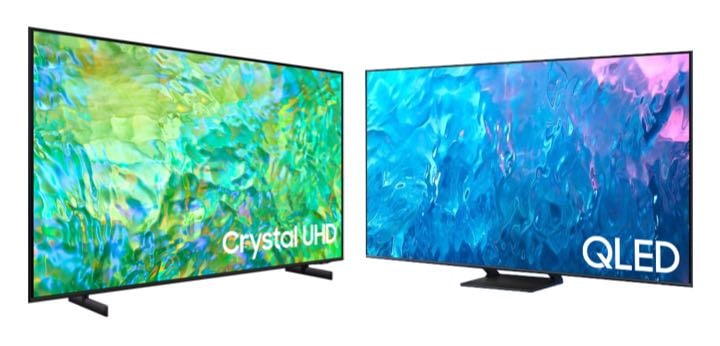
Credit: www.samsung.com
Display Technology
Choosing the right television for your home has become increasingly complex with the emergence of new display technologies. Two popular options in the market are OLED and QLED TVs. Understanding the differences between these two technologies can help you make an informed decision about which TV is best suited for your needs. In this article, we will provide an overview of OLED and QLED technologies, examining their features and benefits to help you make the right choice.
Oled Technology Overview
OLED, which stands for Organic Light-Emitting Diode, is a display technology that consists of self-emitting pixels. Unlike traditional LCD TVs, which require a backlight to illuminate the pixels, OLED TVs use organic compounds that emit light when an electric current is applied. This results in incredible picture quality with deep blacks, vibrant colors, and superior contrast levels. Each pixel can be individually turned on or off, allowing for precise control over brightness and enabling the TV to display true black by completely turning off the pixels.
Qled Technology Overview
QLED, or Quantum Dot Light-Emitting Diode, is a display technology developed by Samsung. It utilizes quantum dot nanoparticles to enhance color accuracy and brightness. QLED TVs still rely on LED backlighting, with the quantum dots acting as a filter to refine the colors displayed on the screen. This technology allows for a wider color gamut, resulting in rich and vivid colors that appear more lifelike. Additionally, QLED TVs often offer high peak brightness, making them well-suited for brightly lit rooms or areas with a lot of natural light.
Performance
The performance of OLED and QLED TVs depends on various factors that impact your viewing experience.
Response Time And Motion Handling
Response Time: OLED TVs have faster response times, resulting in smoother motion handling.
Motion Handling: QLED TVs also deliver excellent motion handling capabilities, especially in fast-paced scenes.
Viewing Angles And Reflection Handling
Viewing Angles: OLED TVs offer wider viewing angles, ensuring consistent picture quality from different positions.
Reflection Handling: QLED TVs perform better in brightly lit rooms as they have better reflection handling.
Durability And Lifespan
Discover the exceptional durability and extended lifespan of OLED and QLED TVs. With OLED offering self-illuminating pixels, and QLED featuring Quantum Dot technology, both provide long-lasting viewing experiences with vivid colors and deep contrast, making them excellent choices for high-quality entertainment.
Durability and Lifespan When it comes to buying a new TV, durability and lifespan are important factors to consider. After all, you want your investment to last for as long as possible. In this section, we will discuss the durability and lifespan of OLED and QLED TVs, focusing on two key aspects: pixel degradation and burn-in. H3: Pixel Degradation and Burn-In (OLED) One of the main concerns with OLED TVs is pixel degradation and burn-in. OLED TVs use organic materials that emit light when an electric current passes through them. Over time, these organic materials can degrade, resulting in pixel deterioration. This can cause certain areas of the screen to become dimmer or show color shifts. Additionally, OLED TVs are more prone to burn-in. Burn-in occurs when static images are displayed on the screen for extended periods. The pixels responsible for these images can age faster than the rest of the screen, leading to permanent image retention. This is particularly a concern for those who plan on using their TVs for gaming or watching content with static logos or graphics. To mitigate the risk of pixel degradation and burn-in, manufacturers have implemented features like pixel shifting and screen savers on OLED TVs. Pixel shifting moves the image slightly to prevent prolonged exposure to the same pixels. Screen savers activate after a period of inactivity, reducing the chance of burn-in. However, it’s important to note that pixel degradation and burn-in cannot be completely eliminated. H3: Longevity and Burn-In (QLED) On the other hand, QLED TVs offer better longevity and are less susceptible to burn-in. QLED, or Quantum-dot LED, technology uses tiny semiconductor particles called quantum dots to enhance the color and brightness of the display. These quantum dots are more durable compared to the organic materials used in OLED TVs. QLED TVs are less likely to experience pixel degradation as the quantum dots have a longer lifespan. They can maintain their vibrancy and color accuracy for a longer period without dimming or discoloration. Additionally, QLED TVs have a higher resistance to burn-in, making them a better choice for those who want to use their TVs for gaming or watching content with static elements. However, it’s essential to note that QLED TVs may still experience slight image retention if static images are displayed for extended durations. To prevent this, it is recommended to avoid leaving static logos or graphics on the screen for prolonged periods. Taking simple precautions can help prolong the lifespan of your QLED TV and reduce the risk of burn-in. In conclusion, while OLED TVs offer exceptional picture quality, they are more prone to pixel degradation and burn-in compared to QLED TVs. For those seeking a durable and long-lasting TV that is less likely to suffer from image retention, QLED technology proves to be a reliable choice. However, by implementing certain features and being mindful of prolonged static image exposure, you can enjoy the benefits of both OLED and QLED TVs.Gaming And Refresh Rates
When choosing between OLED and QLED TVs for gaming, understanding the gaming and refresh rates is essential. These factors directly impact your gaming experience, including input lag and refresh rate capabilities.
Input Lag And Gaming Features
Input lag refers to the time it takes for your actions to reflect on the screen, crucial for gamers to have seamless gameplay. OLED TVs typically have lower input lag, providing a more responsive gaming experience. They also come with advanced gaming features like Auto Low Latency Mode (ALLM) and Variable Refresh Rate (VRR) support.
Refresh Rate And Variable Refresh Rate (vrr)
Refresh rate determines how many frames per second your TV can display, affecting the smoothness of motion in games. QLED TVs often boast higher refresh rates compared to OLED, offering smoother gameplay. Variable Refresh Rate (VRR) technology syncs the TV’s refresh rate with the gaming console for tear-free and stutter-free gaming.

Credit: www.youtube.com
Price And Affordability
When comparing OLED and QLED TVs, price and affordability play a significant role. While OLED offers superior image quality, QLED provides a more budget-friendly option without compromising on performance. It ultimately depends on individual preferences and budget constraints when choosing between the two technologies.
Cost Comparison
When considering a new TV purchase, price is often a significant factor. Both OLED and QLED TVs offer advanced technologies and impressive display qualities, but their price points can differ. Let’s take a closer look at the cost comparison between OLED and QLED TVs.Value For Money
Determining the value for money is essential before investing in a new TV. OLED and QLED TVs differ not only in price but also in their performance and features. To assess which option provides the best value for money, let’s delve into the details. One aspect that influences a TV’s value for money is the overall image quality. OLED TVs utilize organic compounds that emit light independently, resulting in incredibly deep blacks, vibrant colors, and exceptional contrast. On the other hand, QLED TVs use Quantum Dot technology, which enhances color accuracy and brightness in a slightly different way. While OLED excels in reproducing true blacks, QLED displays offer brighter whites. Another crucial consideration for value for money is the lifespan of the TV. OLED panels tend to have a shorter lifespan compared to QLED displays. OLED technology uses organic compounds that degrade over time, whereas QLED panels can last longer due to their inorganic materials. However, it’s important to note that both types of TVs are designed to provide several years of reliable service. Additionally, energy efficiency plays a role in determining the value for money. OLED TVs consume less power than QLED displays when displaying dark scenes or showing black images. This is because OLED technology can individually turn off pixels to achieve true blacks, resulting in lower energy consumption. However, when it comes to displaying bright images, QLED TVs tend to be more energy-efficient. Considering the above factors, OLED TVs generally have a higher upfront cost compared to QLED TVs. However, their exceptional image quality and deep blacks make them a popular choice among enthusiasts and those who prioritize an immersive viewing experience. On the other hand, QLED TVs offer a more affordable alternative for those seeking improved color accuracy and brightness at a relatively lower price point. In conclusion, when it comes to choosing between OLED and QLED TVs, the decision ultimately depends on your individual preferences, priorities, and budget. OLED TVs provide unparalleled picture quality but come at a higher price, whereas QLED TVs offer a more affordable option with impressive color accuracy and brightness. Consider what matters most to you and make an informed decision that suits your needs and wallet.
Credit: m.youtube.com
Frequently Asked Questions Of Oled Vs Qled Tv
Which Is Better Oled Or Qled?
OLED and QLED are both excellent display technologies, but OLED offers better picture quality with deeper blacks and wider viewing angles. QLED, on the other hand, has brighter colors and better brightness levels. Ultimately, the choice depends on your preferences and the specific needs of your usage scenario.
What Is Qled Vs Oled Disadvantages?
QLED disadvantages include potential burn-in and limited viewing angles. OLED disadvantages are also burn-in and higher cost.
What Are The Disadvantages Of Oled Tv?
OLED TVs may have burn-in issues, higher price, and limited brightness compared to other types of TVs.
Is Oled Really That Much Better?
Yes, OLED is significantly better than other display technologies. It offers richer colors, deeper blacks, and wider viewing angles. The individual pixels emit their own light, resulting in better contrast and finer details. OLED screens are also thinner and more flexible, allowing for innovative designs in devices.
Conclusion
To sum up, both OLED and QLED TVs have their unique strengths and advantages. OLED offers deep blacks and wide viewing angles, making it ideal for movie enthusiasts. On the other hand, QLED delivers vibrant colors and better brightness levels, making it great for sports and gaming.
Ultimately, the choice between the two depends on your personal preferences and budget. Make an informed decision based on what matters most to you in your TV viewing experience.