OLED TVs offer superior picture quality and deeper blacks compared to LED TVs. OLED TVs have advanced pixel technology that allows each pixel to emit its own light, resulting in rich colors and infinite contrast.
LED TVs, on the other hand, use a backlight behind the LCD screen to create images, which can lead to less accurate color reproduction and weaker contrast. In addition, OLED TVs have wider viewing angles and faster response times, making them ideal for watching sports or playing video games.
However, LED TVs are generally more affordable and come in a wider range of sizes and brands. Ultimately, the choice between OLED and LED comes down to personal preference and budget.
Evolution Of Display Technology
The Evolution of Display Technology has brought about major advancements in the way we experience visual content. From bulky, cathode-ray tube televisions to sleek, high-definition displays, the journey of display technology has been marked by continuous innovation and improvement. In recent years, the rivalry between OLED and LED TVs has taken center stage, showcasing the latest in display technology.
The Rise Of Led Tvs
LED TVs emerged as a revolutionary upgrade to traditional LCD displays. The utilization of light-emitting diodes (LEDs) as a backlight source brought about enhanced brightness, contrast, and energy efficiency. This significant leap in technology led to thinner screens and improved color accuracy, thus offering viewers a more immersive visual experience.
Introduction Of Oled Technology
With the rise of LED technology, the introduction of OLED TVs marked yet another milestone in display evolution. OLED stands for organic light-emitting diode, and unlike LED backlights, OLED panels emit their own light individually, enabling true black levels, unparalleled contrast, and a wider viewing angle. The organic nature of OLED technology allows for thinner and more flexible displays, contributing to the creation of innovative and futuristic television designs.
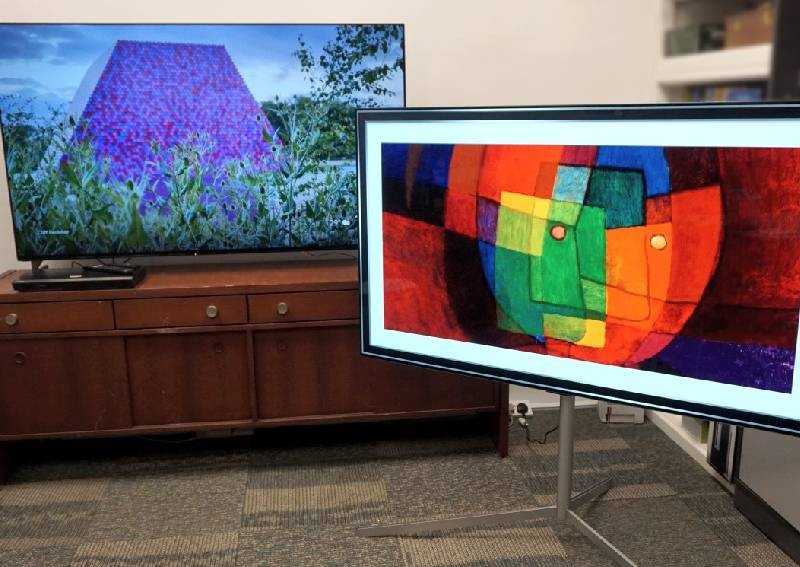
Credit: www.asiaone.com
How Oled And Led Tvs Work
LED TV technology relies on backlighting to illuminate the screen, whereas OLED TVs use self-emitting pixels for light.
Led Tv Technology
In LED TVs, light-emitting diodes behind the LCD screen provide the light source, passing through colored filters for display.
Oled Tv Technology
In OLED TVs, each pixel emits its light, creating vibrant colors and true black levels for superior picture quality.
Picture Quality And Color Reproduction
When it comes to choosing between OLED and LED TVs, one of the essential factors to consider is picture quality and color reproduction. Both technologies offer impressive visuals, but understanding their differences can help you make a more informed decision.
Led Tv Color Reproduction
LED TVs use an array of light-emitting diodes (LEDs) to illuminate the screen. These diodes are placed behind the LCD panel and emit light, which then passes through the liquid crystals to create an image. LED TVs are known for their bright and vivid colors, with excellent overall color reproduction.
The color gamut of LED TVs varies among different models, but they generally provide a wide range of colors. However, LED technology struggles to reproduce true blacks and offers limited contrast ratios, which can affect the depth and richness of the image. This limitation becomes noticeable when viewing scenes with dark or shadowy elements, as LED TVs may struggle to provide the same level of detail and depth that OLED TVs can offer. Additionally, LED TVs may encounter slight color inaccuracies or inconsistencies due to the backlighting.
Oled Tv Color Reproduction
OLED (Organic Light-Emitting Diode) TVs utilize self-emitting pixels that produce their light. Unlike LED TVs, each pixel in an OLED display can turn on or off independently, resulting in incredibly deep blacks and exceptional contrast ratios. This ability to turn off individual pixels also means that OLED TVs can deliver more accurate and vibrant colors.
With OLED technology, colors appear more true-to-life, showcasing a wider range of hues and enhancing overall color accuracy. The self-emitting pixels allow for precise control over each pixel’s brightness, resulting in enhanced details in both bright and dark scenes. This characteristic makes OLED TVs particularly outstanding when it comes to showcasing subtle shades and gradients, providing a more immersive viewing experience.
Another advantage of OLED TVs is their wide viewing angles. Due to the nature of the technology, OLED displays maintain consistent picture quality even when viewed from various angles, compared to LED TVs that may experience color shifting or loss of detail.
Contrast Ratio And Black Levels
One of the crucial factors distinguishing OLED and LED TVs is their contrast ratio and black levels.
Led Tv Contrast Ratio
LED TVs offer decent contrast ratios but may not achieve deep blacks. They rely on backlighting that can affect blacks.
Oled Tv Contrast Ratio
OLED TVs excel in contrast ratios by producing deep, true blacks. Each pixel emits its light, enabling precise black levels and vibrant colors.
Viewing Angles And Screen Flexibility
IntroductionViewing Angles and Screen Flexibility: When it comes to choosing between OLED and LED TVs, one crucial factor to consider is the difference in viewing angles and screen flexibility. This aspect determines how the display performs when viewed from different positions and angles, as well as the degree to which the screen itself can bend or flex. Understanding these features can help you make an informed decision when selecting the right TV for your needs.
LED TV Viewing AnglesLed Tv Viewing Angles
LED TVs utilize LCD technology with a backlighting system composed of hundreds of tiny LEDs. While LED TVs offer impressive brightness and vibrant colors, their viewing angles tend to be more limited compared to OLED panels.
When viewing an LED TV from off-center angles, you may notice a decrease in image quality, such as loss of color accuracy and contrast. This limitation can be particularly noticeable when multiple people are watching the TV from different seating positions in the room.
For the best viewing experience, it is recommended to sit directly in front of an LED TV, as this ensures optimal image quality and sharpness.
OLED TV Viewing AnglesOled Tv Viewing Angles
OLED (Organic Light-Emitting Diode) TVs, on the other hand, offer unparalleled viewing angles thanks to their individual self-emissive pixels. These pixels emit their light, eliminating the need for a backlighting system present in LED TVs. Consequently, OLED TVs provide consistent picture quality regardless of the viewing angle.
Whether you are sitting directly in front of the TV or positioned to the side, OLED screens maintain their color accuracy, contrast, and black levels. This means that everyone in the room can enjoy an equally mesmerizing viewing experience, regardless of their seating arrangement.
OLED TVs offer exceptional flexibility when it comes to screen curvature as well. The organic nature of OLED materials allows for a curved display that can immerse viewers in a more theater-like experience. The curvature enhances the perception of depth, making movies and shows more engaging and lifelike.
Wrap UpIn conclusion, while LED TVs may have some limitations in terms of viewing angles, OLED TVs provide a superior experience with wide viewing angles and the added benefit of screen flexibility. Whether you prioritize a broader viewing angle or the curvature of the screen, understanding these differences can guide you towards making the right choice for your entertainment needs.
Energy Efficiency And Lifespan
When choosing between OLED and LED TVs, it’s important to consider factors like energy efficiency and lifespan, which can impact long-term cost and sustainability.
Led Tv Energy Efficiency
LED TVs are known for their energy efficiency compared to traditional LCD TVs. LED technology uses light-emitting diodes to illuminate the screen, consuming less power.
- Energy-saving: LEDs require less energy to operate, reducing electricity bills.
- Environmentally friendly: Lower energy consumption means a smaller carbon footprint.
- Long-term savings: Efficient LED technology can lead to cost savings over time.
Oled Tv Lifespan
OLED TVs boast a longer lifespan compared to LED TVs. Organic light-emitting diodes used in OLED displays have a self-illuminating property, eliminating the need for a backlight.
- Durable: OLED panels are less prone to wear and tear, extending their lifespan.
- Consistent performance: Self-emissive OLED technology maintains picture quality over time.
- High-quality visuals: OLED TVs deliver vibrant colors and deep blacks throughout their lifespan.
Price And Affordability
The price and affordability of TVs play a crucial role in the decision-making process for consumers. Let’s break down the LED TV pricing and OLED TV affordability to understand the options available in the market.
Led Tv Pricing
LED TVs are known for their affordability compared to OLED TVs. The cost-effectiveness of LED TVs makes them a popular choice for budget-conscious buyers.
- LED TVs typically offer competitive pricing due to mass production and availability in a wide range of sizes.
- The entry-level LED TVs provide good picture quality at a reasonable price point for consumers.
Oled Tv Affordability
While OLED TVs are known for their superior picture quality, they are priced on the higher end of the spectrum.
- OLED TVs are considered a premium product, appealing to consumers seeking top-notch display technology.
- The higher price of OLED TVs reflects the quality of features such as deeper blacks and vibrant colors.

Credit: afrotech.com
Making An Informed Decision
When it comes to choosing the right TV for your home, the decision can be overwhelming. With countless options available in the market, it’s important to understand the key considerations to make an informed choice. In this article, we will compare OLED and LED TVs, highlighting the factors you need to consider before making your purchase.
Key Considerations
Before we dive into the comparison between OLED and LED TVs, let’s understand the key factors to consider:
- Picture Quality: The picture quality is a crucial aspect when choosing a TV. It determines the clarity, color accuracy, and contrast of the images displayed. Both OLED and LED TVs deliver impressive visuals, but they have significant differences in how they achieve it.
- Contrast Ratio: Contrast ratio refers to the difference between the darkest blacks and the brightest whites on the screen. OLED TVs have an advantage in this area, as they can completely turn off individual pixels to achieve perfect blacks, resulting in an infinite contrast ratio.
- Brightness: LED TVs have a higher brightness level compared to OLED TVs. If you plan on placing the TV in a brightly lit room, LED may be a better choice as it can combat glare and provide better visibility.
- Viewing Angle: OLED TVs offer wider viewing angles compared to LED TVs. This means that no matter where you sit in the room, you will have a consistent and accurate picture quality. LED TVs may experience color distortion when viewed from certain angles.
- Energy Efficiency: LED TVs are more energy-efficient than OLED TVs. LED technology consumes less power, helping you save money on electricity bills in the long run.
Choosing The Right Tv For You
Now that you are aware of the key considerations, it’s time to choose the right TV for you:
| OLED TV | LED TV |
|---|---|
|
|
Ultimately, the choice between OLED and LED TV depends on your personal preferences and viewing conditions. If you prioritize exceptional picture quality, wide viewing angles, and have a dark room, OLED may be the right choice for you. However, if you have a brightly lit room and energy efficiency is a concern, LED TV would be a suitable option. Consider your needs, budget, and the environment where the TV will be placed before making the final decision.

Credit: glarity.app
Frequently Asked Questions For Oled Vs Led Tv
Which Is Better Led Or Oled Tv?
LED and OLED TVs both offer excellent picture quality, but OLED TVs generally provide richer colors, deeper blacks, and wider viewing angles. LED TVs are more affordable and offer higher brightness levels. The choice depends on your budget and preference for color accuracy or affordability.
What Are The Downsides Of Oled Tv?
OLED TVs have limited lifespan, risk of burn-in, and high cost compared to LED TVs. They may not get as bright as LED counterparts, and there can be issues with motion blur.
Do Led Or Oled Tvs Last Longer?
LED TVs generally have a longer lifespan than OLED TVs. LED TVs can last up to 100,000 hours, while OLED TVs typically last around 50,000 hours. LED TVs use inorganic materials, making them more durable. However, both types have a significantly long lifespan.
Is Oled Worth The Extra Money?
Yes, OLED is worth the extra money. It offers better picture quality, deeper blacks, vibrant colors, and wider viewing angles, enhancing the overall visual experience. Additionally, OLED displays are thinner and more energy-efficient. The investment in OLED technology ensures a stunning and immersive viewing experience for your entertainment needs.
Conclusion
To sum it up, both OLED and LED TVs have their own merits and demerits. While OLED offers vibrant colors and deep blacks, LED provides better affordability and energy efficiency. So, it ultimately boils down to personal preferences and budget.
Whether you prioritize picture quality or cost-effectiveness, make sure to weigh your options and choose the TV that meets your specific needs. Stay informed, make an informed decision, and enjoy your upgraded viewing experience.