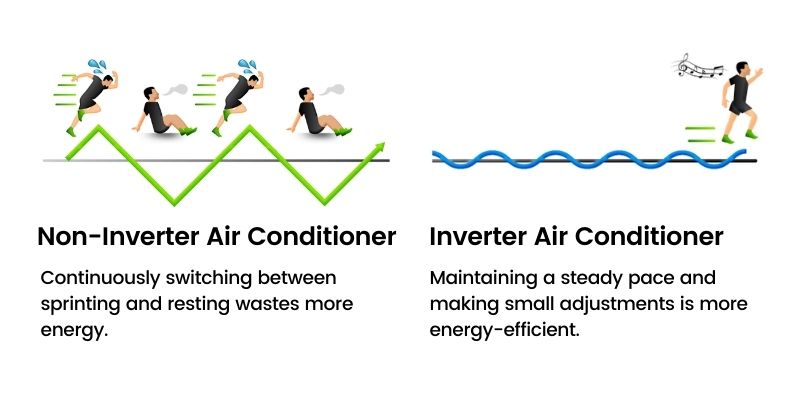
Inverter air conditioners are more energy efficient and quieter than non-inverter air conditioners. They adjust compressor speed to maintain desired temperature levels efficiently, offering cost savings and comfort.
Inverter technology allows for precise temperature control, resulting in consistent cooling or heating, and faster room temperature stabilization. By contrast, non-inverter air conditioners operate at a fixed speed, leading to frequent on-off cycles and temperature fluctuations. This comprehensive comparison will help you make an informed decision when choosing between inverter and non-inverter air conditioners based on your specific needs and preferences.

Credit: www.metropolitanairconditioning.com.au
Understanding Inverter Air Conditioner
How It Works
An inverter air conditioner regulates the speed of the compressor motor to control the temperature more efficiently.
Variable Speed Compressor
The inverter system allows the compressor to operate at different speeds for precise cooling.
Energy Savings
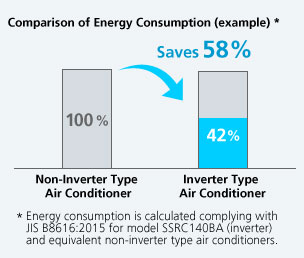
Inverter ACs consume less power by adjusting the cooling output according to the room’s requirements.
Credit: www.daikin.com
Understanding Non-inverter Air Conditioner
When it comes to choosing the right air conditioner for your home or office, it’s crucial to understand the differences between inverter and non-inverter models. In this section, we will discuss non-inverter air conditioners in detail, helping you make an informed decision.
Traditional Compressor
Non-inverter air conditioners operate using a traditional compressor. Unlike inverter models, which have variable speeds, non-inverter air conditioners have a fixed speed compressor. This means that the compressor either runs at maximum capacity or switches off completely, depending on the temperature of the room.
In a non-inverter air conditioner, the traditional compressor switches on when the room temperature rises above the set temperature, and it remains on until the desired temperature is reached. Once the temperature is achieved, the compressor switches off until the temperature rises again. This simple operation is a key characteristic of non-inverter air conditioners.
Operating Cycle
The operating cycle of a non-inverter air conditioner is relatively straightforward. When the desired temperature is set, the unit starts operating. The compressor runs continuously until the temperature is reached. Once the temperature is achieved, the compressor shuts off, and the fan continues to circulate the cool air. When the room temperature increases, the compressor switches on again to maintain the set temperature.
This repetitive cycle continues throughout the usage of the non-inverter air conditioner. As a result, the compressor experiences frequent stop and starts, causing the system to operate in a non-linear manner.
Energy Consumption
Non-inverter air conditioners are known for their higher energy consumption compared to inverter models. The constant starting and stopping of the compressor in non-inverter models lead to increased power usage, resulting in higher electricity bills.
Since non-inverter air conditioners operate at full capacity each time the compressor starts, they consume more energy to cool the room quickly. Moreover, the frequent cycling of the compressor can also lead to higher levels of noise and vibration.
When it comes to selecting an air conditioner, consider your specific needs and requirements. While non-inverter air conditioners may have a lower initial cost, they can be less energy-efficient in the long run. To make an informed decision, compare the features and benefits of both inverter and non-inverter models, taking into account your budget, energy-efficiency goals, and noise preferences.
Energy Efficiency Comparison
Choosing between an inverter air conditioner and a non-inverter air conditioner? Consider the energy efficiency of both options for an informed decision that optimizes your cooling experience while minimizing electricity consumption.
Cooling Performance:
In terms of cooling performance, both inverter and non-inverter air conditioners work effectively to cool your space. However, there is a difference in how they maintain the desired temperature. Inverter air conditioners use a variable speed compressor that adjusts its cooling capacity based on the room temperature. This allows for a more precise and consistent cooling experience, ensuring that the temperature remains stable.
On the other hand, non-inverter air conditioners have a fixed speed compressor that operates at maximum capacity until the desired temperature is reached, and then it shuts off. When the temperature rises, the compressor turns on again at full speed. While this may lead to slightly fluctuating temperatures, it is still capable of providing adequate cooling.
Power Consumption:
When it comes to power consumption, inverter air conditioners are more energy-efficient compared to non-inverter models. The variable speed compressor in inverter air conditioners allows it to adjust its cooling capacity based on the room temperature, which means it doesn’t need to run at full power continuously. This results in lower power consumption, reducing your electricity bills in the long run.
Non-inverter air conditioners, on the other hand, operate at full power until the desired temperature is reached and then completely shut off. This on-off cycling can lead to higher power consumption as the compressor requires more energy to start up each time it turns on. This constant start-up and shutdown also put more strain on the compressor, reducing its lifespan.
Running Cost:
The running cost of an air conditioner includes both the initial purchase cost as well as the operational cost over its lifespan. Inverter air conditioners may have a higher upfront cost compared to non-inverter models, but they offer significant energy savings over time.
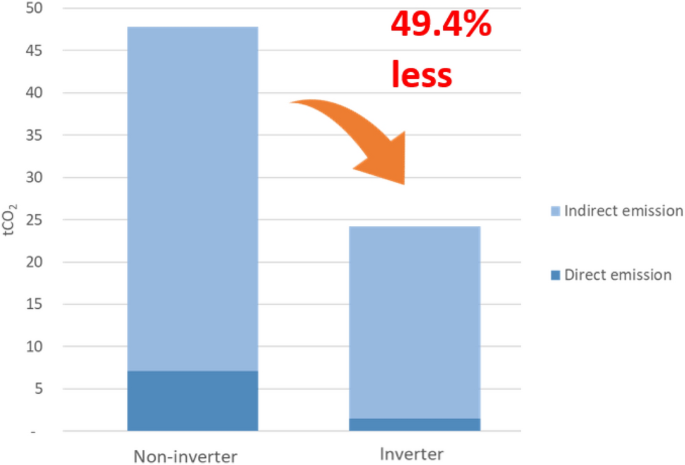
Because inverter air conditioners consume less power and maintain a steady temperature, they are more cost-effective in the long run. They not only help reduce your monthly electricity bills but also contribute to a greener environment by reducing carbon emissions.
Non-inverter air conditioners may have a lower initial cost, but their higher power consumption leads to increased operational costs. Additionally, their shorter lifespan and frequent maintenance requirements can add to the overall running cost over time.
Credit: link.springer.com
Environmental Impact
Environmental Impact:
Refrigerants
Inverter air conditioners utilize newer refrigerants with lower Global Warming Potential (GWP).
Non-Inverter air conditioners often use dated refrigerants causing harm to the ozone layer.
Carbon Emissions
Inverter models are energy-efficient, resulting in reduced carbon emissions compared to non-inverter types.
Non-Inverter ACs consume more power, leading to higher carbon footprint.
Lifespan And Maintenance
Compare the lifespan and maintenance of inverter and non-inverter air conditioners. Inverters generally have longer lifespan and require less maintenance due to their energy-efficient operation. Proper maintenance ensures optimal performance for both types of air conditioners.
Inverter Air Conditioners have longer lifespan than Non-Inverter Air Conditioners.Component Wear
In Inverter ACs, compressor stress is lower, resulting in less wear.Maintenance Requirements
Regular cleaning and filter replacement are key for both AC types. Non-Inverter ACs need more maintenance due to increased wear on components. Inverter ACs require less frequent maintenance for optimal performance.- Regular cleaning
- Filter replacement
- Inspecting compressor
Cost Considerations
Choosing between an inverter air conditioner and a non-inverter air conditioner involves several important factors, and cost is definitely one of them. When considering the cost, there are two aspects to think about: the initial investment and long-term savings. Let’s take a closer look at each of these factors.
Initial Investment
When it comes to the initial investment, non-inverter air conditioners tend to be more budget-friendly. These units are typically priced lower compared to their inverter counterparts. However, it’s important to note that this lower price comes at a cost. Non-inverter air conditioners are notorious for consuming more electricity, which can lead to higher energy bills in the long run.
On the other hand, inverter air conditioners have a higher upfront cost. They usually carry a premium price tag due to their advanced technology. However, it’s essential to see this as an investment rather than an expense. Inverter air conditioners are designed to be energy-efficient, which means they consume less power to maintain the desired temperature. This energy-saving feature can lead to significant savings on your monthly electricity bills.
Long-term Savings
While non-inverter air conditioners may be cheaper to purchase initially, they tend to be less energy-efficient. These units work by running at maximum capacity until the desired temperature is reached and then turning off. Once the temperature rises again, they switch back on, leading to frequent on-off cycling. This constant on-off cycle causes spikes in energy consumption, resulting in higher bills in the long run.
In contrast, inverter air conditioners constantly adjust their power consumption to maintain a consistent temperature. Rather than shutting off entirely, they modulate their compressor’s speed to match the cooling demand. This continuous operation helps save energy and creates a more stable and comfortable indoor environment. As a result, inverter air conditioners can significantly reduce your energy consumption and save you money in the long term.
Moreover, these long-term savings extend beyond electricity bills. Inverter air conditioners are built to be durable and have a longer lifespan than non-inverter models. With proper maintenance, they can provide efficient cooling for many years, saving you money on repairs and replacements.
So, while the initial investment may be higher for an inverter air conditioner, the long-term savings in terms of energy efficiency and durability make it a worthwhile choice, both for your pocket and the environment. Consider your budget and energy-saving goals before making your decision.
Frequently Asked Questions For Inverter Air Conditioner Vs Non-inverter Air Conditioner
Which Is Better Inverter Ac Or Non-inverter Ac?
An inverter AC is better than a non-inverter AC due to its energy efficiency and quieter operation. It adjusts its compressor speed to match cooling needs, saving energy and providing consistent temperature. This can result in lower electricity bills and improved comfort.
What Is The Disadvantage Of Inverter Ac?
The main disadvantage of inverter AC is its higher initial cost. It may not be affordable for everyone.
Are Inverter Air Conditioners Better?
Yes, inverter air conditioners are better. They are energy-efficient, quieter, and provide more consistent cooling.
What Is The Advantage Of Inverter Ac Over Normal Ac?
The advantage of an inverter AC over a normal AC is that it consumes less electricity, resulting in lower energy bills. Inverter ACs also provide more precise cooling, faster cooling/heating, and a quieter operation. These features make inverter ACs more efficient and cost-effective in the long run.
Conclusion
Opting for an inverter air conditioner can lead to energy savings and improved comfort levels. The initial higher cost is offset by long-term benefits. Understanding your specific needs can help you make the right choice between inverter and non-inverter models for optimal cooling efficiency.