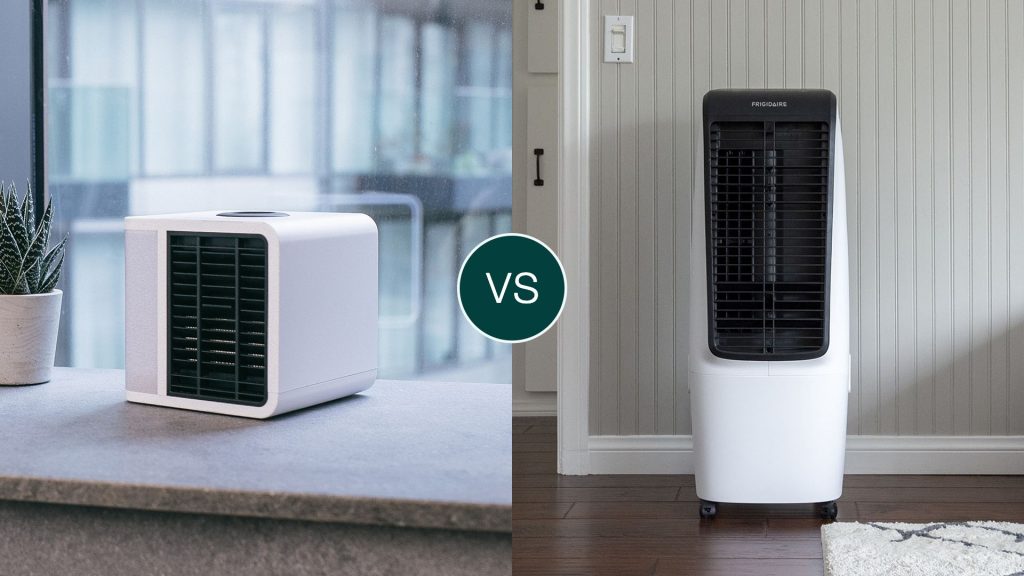
When deciding between a portable air conditioner vs evaporative cooler, consider your cooling needs and environmental factors. Portable air conditioners use refrigerant to cool the air, making them efficient in humid climates, whereas evaporative coolers use water to cool the air, ideal for dry climates.
Both options have their benefits and drawbacks, so understanding the differences will help you make the best choice for your space. Portable air conditioners are better suited for indoor use and offer precise temperature control, while evaporative coolers are energy efficient and excel at adding moisture to the air.
By evaluating your climate, space requirements, and cooling preferences, you can select the most suitable option for your home or office.

Credit: www.rollingstone.com
How They Work
In this section, we’ll delve into how portable air conditioners and evaporative coolers work. Understanding the mechanics behind these systems can help you make an informed decision when choosing the right cooling solution for your space.
Portable Air Conditioner
A portable air conditioner extracts heat from the air inside your room using refrigerants. The unit pulls in warm air, passes it over cold coils containing the refrigerant, and then blows the cooled air back into the room. At the same time, the extracted heat is expelled outside through an exhaust hose, allowing the room to maintain a comfortable temperature.
Evaporative Cooler
An evaporative cooler, also known as a swamp cooler, operates on the principle of evaporation. It draws in warm air from outside, passing it through water-saturated pads within the unit. As the air moves through the moist pads, the water evaporates, causing the air temperature to drop. The cooler air is then circulated into the space, providing a natural and efficient cooling effect. Unlike air conditioners, evaporative coolers increase humidity in the air, making them ideal for dry climates.
Cooling Efficiency
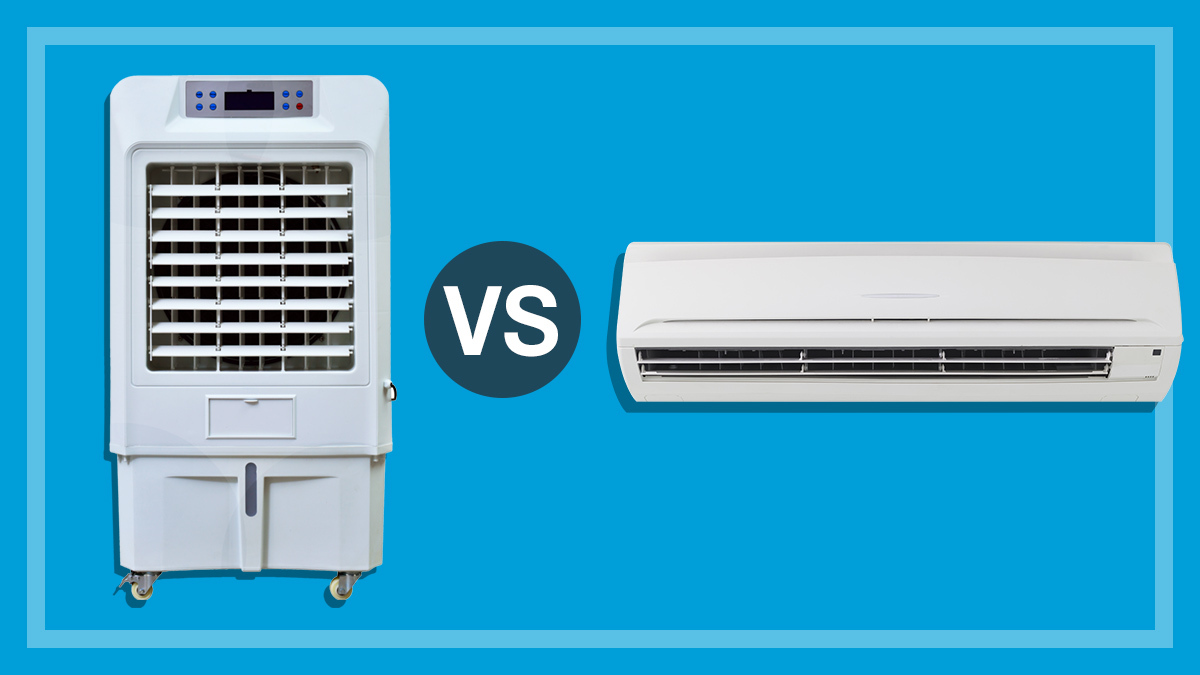
Portable air conditioners and evaporative coolers are both options for cooling efficiency. While portable air conditioners use a refrigeration cycle to cool and dehumidify the air, evaporative coolers use water evaporation to lower the temperature. Choosing between the two depends on factors like climate, humidity levels, and personal preferences.
Temperature Reduction
Portable Air Conditioner: Utilizes refrigeration to cool air; can achieve rapid temperature drop.
Evaporative Cooler: Works by evaporating water to cool air; provides moderate temperature reduction.
Suitability For Dry Or Humid Climates
Portable Air Conditioner: Effective in humid climates; may struggle in extremely dry conditions.
Evaporative Cooler: Ideal for dry climates; less efficient in areas with high humidity.
“` Portable Air Conditioner: – Uses refrigeration. – Rapid temperature drop. – Good for humid climates. Evaporative Cooler: – Evaporates water. – Moderate temperature reduction. – Ideal for dry climates. – Less effective in high humidity.Energy Efficiency
Enhance your energy efficiency with a comparison between portable air conditioners and evaporative coolers. Opt for the more cost-effective and eco-friendly cooling solution based on your specific needs. Make the right choice for a comfortable and sustainable indoor environment.
Power Consumption
Portable air conditioners and evaporative coolers differ when it comes to power consumption. These differences can have a significant impact on your energy bills. Let’s take a closer look at how each of them fares in terms of power consumption. When it comes to power consumption, portable air conditioners tend to draw more energy compared to evaporative coolers. This is because air conditioners use a compressor and refrigerant to cool the air, which requires a substantial amount of electricity. On the other hand, evaporative coolers rely on the natural process of evaporation to cool the air, consuming less electrical power. In fact, evaporative coolers are known for their energy-efficient operation, making them a cost-effective cooling option.Eco-friendliness
Considering the environmental impact of cooling appliances is crucial to make an eco-conscious decision. Let’s compare the eco-friendliness of portable air conditioners and evaporative coolers. Portable air conditioners, due to their reliance on refrigerants, can contribute to the depletion of the ozone layer and are associated with greenhouse gas emissions. This makes them less environmentally friendly compared to evaporative coolers. Evaporative coolers, on the other hand, do not use any refrigerants or harmful chemicals, making them a greener cooling option. Evaporative coolers utilize the natural process of evaporation, which uses water instead of chemicals to cool the air. As a result, they consume less energy and produce fewer emissions compared to air conditioners. With rising concerns about climate change and the need to minimize our carbon footprint, choosing an evaporative cooler can be a more environmentally conscious choice. In conclusion, portable air conditioners consume more power and are less eco-friendly compared to evaporative coolers. If you are looking for an energy-efficient and eco-friendly cooling solution, an evaporative cooler might be the better option for you.Installation And Portability
When it comes to choosing between a portable air conditioner and an evaporative cooler, one of the key factors to consider is their installation and portability. This section will outline the setup requirements as well as the mobility and versatility of both cooling systems.
Setup Requirements
The setup requirements for portable air conditioners and evaporative coolers differ significantly. Portable air conditioners generally require more extensive installation compared to evaporative coolers. Here are the details:
| Portable Air Conditioner | Evaporative Cooler |
|---|---|
| Requires an exhaust hose that needs to be vented out of a window or another suitable opening. | No exhaust hose required, as it operates by adding moisture to the air through evaporation. |
| May need to be connected to a power outlet and possibly require professional assistance for installation. | Can be easily plugged into a standard power outlet without the need for professional help. |
As evident from the table above, the setup requirements for evaporative coolers are relatively simpler and more DIY-friendly compared to portable air conditioners. If you’re looking for a cooling solution that is quick and hassle-free to set up, an evaporative cooler might be a better option for you.
Mobility And Versatility
Mobility and versatility are important considerations when it comes to portable cooling systems. Let’s take a look at how portable air conditioners and evaporative coolers fare in these aspects:
- Portable Air Conditioner: Despite their name, portable air conditioners are usually heavier and bulkier than evaporative coolers. However, they often come equipped with caster wheels, making it easier to move them around from room to room. This added mobility allows you to cool different areas of your home whenever and wherever needed.
- Evaporative Cooler: Evaporative coolers, also known as swamp coolers, are generally lighter and more compact compared to portable air conditioners. This makes them highly portable and easy to maneuver. Their lightweight design allows you to effortlessly transport them to different areas of your home or even outdoors, providing cooling wherever you need it.
Both portable air conditioners and evaporative coolers offer some level of mobility and versatility. However, if you prioritize portability and the ability to move your cooling system around frequently, an evaporative cooler may offer more convenience in this regard.
Maintenance And Cost
- Regularly clean the filters to ensure efficient operation.
- Check and clean water tanks to prevent mold buildup.
- Evaporative coolers may require more frequent maintenance than portable ACs.
| Portable Air Conditioner | Evaporative Cooler | |
|---|---|---|
| Initial Cost | Higher initial cost due to complex components. | Lower initial cost as they are simpler devices. |
| Operating Cost | Generally higher due to higher energy consumption. | Lower operating cost as they use water for cooling. |
Environmental Impact
Environmental Impact:
Refrigerants And Greenhouse Gases
Portable air conditioners use refrigerants contributing to greenhouse gas emissions.
Evaporative coolers, on the other hand, do not use refrigerants, being more environment-friendly.
Water Consumption And Sustainability
Evaporative coolers consume water more than portable air conditioners.
Water usage can be a concern for sustainability with evaporative coolers.
User Considerations
Considering the suitability for various users, it’s important to weigh the benefits of portable air conditioners and evaporative coolers. Portable AC units provide effective cooling in enclosed spaces, while evaporative coolers are ideal for dry climates, offering eco-friendly and cost-effective cooling solutions.
Each option has distinct advantages based on user preferences and environmental factors.
Noise Levels
When considering a portable air conditioner or an evaporative cooler, noise levels are an essential factor to take into account. Nobody wants a noisy unit disrupting their peace, especially when trying to relax or sleep. Thankfully, both options have their pros and cons when it comes to noise levels.
Portable air conditioners tend to generate more noise due to their compressor and fan operation. However, many modern models now come equipped with noise reduction technology, ensuring a quieter experience. It’s crucial to always check the product specifications for noise level ratings before making a purchase.
On the other hand, evaporative coolers are generally quieter compared to air conditioners. They work by using a fan to pull warm air through water-soaked pads, which then cools the air through evaporation. Since there is no compressor involved, the overall noise produced is significantly lower.
Space And Use Case
Another crucial consideration when deciding between a portable air conditioner and an evaporative cooler is the available space and the specific use case. Each option has its advantages depending on your needs and the area you intend to cool.
Portable air conditioners are ideal for smaller spaces like bedrooms, living rooms, or small offices. With their compact size, they can easily be moved from one room to another, ensuring targeted cooling wherever it is needed. These units typically require venting through a window or a wall, so make sure there is suitable access to the outside.
Evaporative coolers, on the other hand, work best in hot and dry climates. They are designed to cool larger areas such as garages, porches, or open-plan living spaces. These units are most effective when used in well-ventilated areas, as they rely on the outside air for the evaporation process.
It’s essential to consider the specific space and intended use before deciding on the right cooling option for your needs.

Credit: www.amazon.com
Credit: www.choice.com.au
Frequently Asked Questions On Portable Air Conditioner Vs Evaporative Cooler
Are Evaporative Coolers Better Than Air Conditioners?
Evaporative coolers are more energy-efficient and eco-friendly than air conditioners. They work by using water to cool the air, while ACs use refrigerants. Evaporative coolers are better for dry climates and open spaces, but ACs are more effective in humid areas.
It depends on your specific needs.
What Is The Difference Between A Portable Air Conditioner And A Portable Evaporative Cooler?
Portable air conditioners use refrigeration to cool the air, while portable evaporative coolers use water evaporation for cooling.
Is A Portable Ac Better Than A Swamp Cooler?
A portable AC is generally more effective than a swamp cooler for cooling large areas. It uses refrigerants to cool the air, while a swamp cooler relies on the evaporation of water. However, swamp coolers are more energy-efficient and recommended for dry climates.
Which Is Better Air Cooler Or Portable Air Conditioner?
An air cooler is better for lower cooling needs, while a portable air conditioner is more suitable for higher cooling requirements. Air coolers use water and air to cool the room, while portable ACs use refrigerants. Consider your cooling needs and budget before choosing between the two.
Conclusion
In the end, choosing between a portable air conditioner and an evaporative cooler depends on your specific needs. Both have their advantages and drawbacks. Consider factors like cost, maintenance, and climate when making your decision. Ultimately, go for the option that best suits your lifestyle and environment.