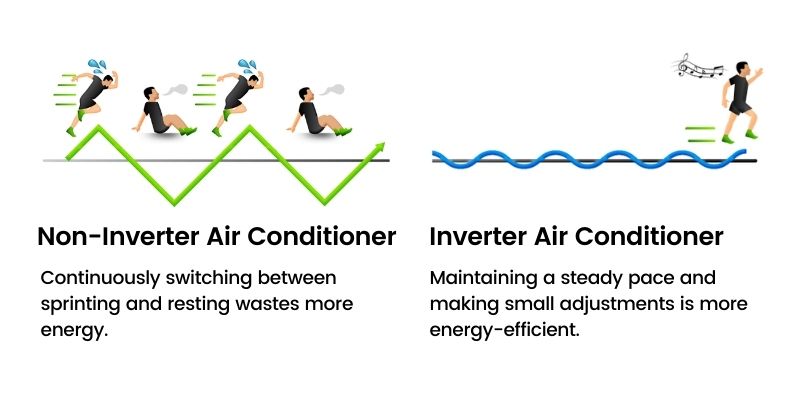
Inverter air conditioners are more energy efficient than normal air conditioners, saving you money on utility bills. They also have a longer lifespan due to their efficient motors or compressors.
On the other hand, normal air conditioners may consume more power and result in higher bills. The critical difference between the two lies in their compressor technology, with inverter air conditioners having variable speed compressors that adjust based on cooling requirements, while normal air conditioners have fixed speed compressors.
Overall, inverter air conditioners provide better energy efficiency and cost savings in the long run.
Credit: www.daikin.com
Understanding Inverter Air Conditioners
Inverter air conditioners are more energy-efficient than normal ones, leading to reduced power bills and enhanced eco-friendliness. Additionally, they have a longer service life due to their efficient compressor technology, making them a cost-effective and sustainable choice for cooling your space.
How Do Inverter Air Conditioners Work?
Inverter air conditioners work differently than normal air conditioners. While normal air conditioners work by turning the compressor on and off to maintain the desired temperature, inverter air conditioners have a variable-speed compressor that continuously adjusts its speed based on the cooling needs. This means that instead of running at full capacity all the time, the compressor adjusts its output according to the room temperature. As a result, inverter air conditioners consume less energy as they don’t have to constantly start and stop the compressor. This also helps in maintaining a consistent temperature in the room, providing greater comfort and reducing temperature fluctuations. The inverter technology allows the air conditioner to ramp up or down its cooling output as required, ensuring efficient operation and optimal energy usage. This is in contrast to normal air conditioners that have fixed-speed compressors, which either run at maximum capacity or are completely off.Benefits Of Inverter Air Conditioners
There are several benefits of using inverter air conditioners compared to normal air conditioners:- Energy efficiency: Inverter air conditioners are designed to be more energy efficient than normal air conditioners. They adjust their cooling output based on the room temperature requirements, which results in reduced energy consumption and lower utility bills in the long run.
- Consistent temperature: The variable-speed compressor in inverter air conditioners helps in maintaining a consistent temperature in the room. There are no sudden temperature fluctuations as the compressor adjusts its speed accordingly.
- Quiet operation: Inverter air conditioners operate at lower noise levels compared to normal air conditioners. The variable-speed compressor runs at a lower speed, resulting in reduced noise during operation.
- Extended lifespan: Due to their efficient operation and reduced strain on the compressor, inverter air conditioners tend to have a longer lifespan compared to normal air conditioners.
- Environmentally friendly: Inverter air conditioners are more environmentally friendly as they consume less energy, resulting in reduced carbon emissions. This makes them a greener choice for cooling your home or office space.
Understanding Normal Air Conditioners
Normal air conditioners are traditional cooling systems commonly used in residential and commercial settings. They operate by extracting heat from the indoor air and transferring it outside, resulting in a cooler environment indoors.
How Do Normal Air Conditioners Work?
- Normal air conditioners use a compressor, condenser, expansion valve, and evaporator to cool the air.
- The compressor pressurizes and circulates the refrigerant gas, which absorbs heat from the indoor air.
- The hot refrigerant gas then flows to the condenser, where it releases the heat outside.
- The cooled refrigerant turns back into a liquid state and goes to the evaporator, where it absorbs heat again.
- The fan blows air over the evaporator coils, cooling it, and then distributes the cooled air into the room.
Limitations Of Normal Air Conditioners
- Normal air conditioners consume more energy compared to inverter air conditioners.
- They have a fixed cooling capacity and cannot adjust based on the room temperature.
- The on-off cycling of the compressor can lead to temperature fluctuations and higher electricity bills.
- Normal air conditioners are less energy-efficient and may not provide consistent cooling in extreme temperatures.
Energy Efficiency
Comparison of energy efficiency between inverter and normal air conditioners
When it comes to energy efficiency, the comparison between inverter and normal air conditioners is crucial for consumers looking to save on utility bills.
Benefits Of Inverter Air Conditioners
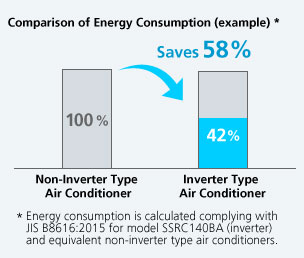
An inverter air conditioner operates at variable speeds, adjusting its power to meet the cooling demand, resulting in reduced energy consumption.
Drawbacks Of Normal Air Conditioners
On the other hand, normal air conditioners operate at a fixed speed, consuming more energy as they constantly turn on and off to regulate the room temperature.
The energy efficiency of inverter air conditioners leads to substantial savings on utility bills as they consume less electricity compared to normal air conditioners.
Moreover, with the reduced energy consumption, inverter air conditioners ensure lower electricity bills, ultimately providing cost savings for consumers.

Credit: www.amazon.com
Cost
Cost: When choosing between an inverter air conditioner and a normal air conditioner, the cost consideration plays a significant role. Examining the initial cost and long-term savings will help in making an informed decision that suits your budget and requirements.
Initial Cost Of Inverter And Normal Air Conditioners
When it comes to the initial cost, inverter air conditioners tend to be more expensive than normal air conditioners. This is primarily due to the advanced technology and components used in inverter ACs, which contribute to a higher price tag. On the other hand, normal air conditioners are generally more affordable upfront, making them an attractive option for those on a tight budget.
Long-term Savings
Despite the higher initial cost, inverter air conditioners offer significant long-term savings. Their energy-efficient operation results in lower electricity consumption, leading to reduced monthly utility bills. Over time, the long-term savings from lower energy costs can offset the higher initial investment, making inverter ACs a cost-effective choice in the grand scheme of things. On the contrary, normal air conditioners consume more power during operation, leading to higher long-term electricity expenses.
Lifespan
Inverter air conditioners have a longer lifespan due to their efficient motors and compressors, requiring less strain compared to normal AC units. This results in energy savings and eco-friendly operation, making them a worthwhile investment for cost-conscious consumers.
Comparison Of Lifespan Between Inverter And Normal Air Conditioners
When it comes to the lifespan of an air conditioner, it is an important factor to consider before making a purchase. The longer the lifespan, the more value you will get from your investment. In this section, we will compare the lifespan of inverter air conditioners and normal air conditioners. Let’s see how they stack up against each other.
Inverter Air Conditioner Lifespan
Inverter air conditioners are known for their efficiency and durability. These ACs use advanced technology that allows the compressor to adjust its speed according to the cooling demand. As a result, the compressor runs at a low speed most of the time, reducing wear and tear. This means that the inverter AC has a longer lifespan compared to a normal AC.
The average lifespan of an inverter air conditioner is around 12-15 years with regular maintenance. This means that you can rely on your inverter AC to keep you cool for a long time without the need for frequent replacements.
Normal Air Conditioner Lifespan
On the other hand, normal air conditioners have a shorter lifespan compared to inverter ACs. These ACs use a fixed-speed compressor that runs at a constant speed regardless of the cooling demand. This constant running can put a strain on the compressor, leading to a shorter lifespan.
The average lifespan of a normal air conditioner is around 8-10 years with regular maintenance. This means that you may need to replace your normal AC more frequently compared to an inverter AC.
It is important to note that the lifespan of an air conditioner can vary depending on factors such as usage, maintenance, and quality of the AC unit. Regular maintenance, such as cleaning the filters and coils, can help extend the lifespan of your air conditioner regardless of whether it is an inverter AC or a normal AC.
Conclusion
Inverter air conditioners have a longer lifespan compared to normal air conditioners. This is due to the advanced technology used in inverter ACs that reduce wear and tear on the compressor. However, it is important to take into account other factors such as energy efficiency and cost when choosing between an inverter AC and a normal AC. Ultimately, the lifespan of your air conditioner can be extended with regular maintenance and proper usage.
Suitability
Suitability:
When To Use Inverter Air Conditioners
- Energy Efficiency: Inverter ACs are ideal for continuous use and maintaining a consistent temperature, making them suitable for rooms that require prolonged cooling.
- Variable Cooling Needs: Inverter ACs are great for spaces where the cooling requirements fluctuate frequently, as they can adjust their compressor speed accordingly.
- Long-term Investment: If you prioritize energy savings and durability, inverter ACs are a wise choice as they have a longer lifespan.
When To Use Normal Air Conditioners
- Occasional Use: Normal ACs are suitable for spaces that only require cooling for short periods, as they operate on a fixed speed.
- Cost Consideration: If upfront cost is a primary concern over long-term savings, normal ACs might be more suitable as they typically have a lower initial investment.
- Simple Maintenance: For those looking for simpler maintenance and repair options, normal ACs can be more straightforward compared to inverter models.
Pros And Cons
In the debate between inverter air conditioners and normal air conditioners, understanding their pros and cons can help you make an informed decision for your cooling needs.
Advantages Of Inverter Air Conditioners
- Higher energy efficiency
- Reduced electricity consumption
- Lower power bills
- Eco-friendly operation
- Longer lifespan
Disadvantages Of Inverter Air Conditioners
- Underpowered units can lead to higher power consumption
- Require proper insulation for maximum efficiency
Advantages Of Normal Air Conditioners
- Simpler technology
- Lower initial cost
- Suitable for smaller spaces
Disadvantages Of Normal Air Conditioners
- Higher energy consumption
- Less energy efficient
- Shorter lifespan compared to inverter ACs
Credit: link.springer.com
Frequently Asked Questions On Inverter Air Conditioner Vs Normal Air Conditioner
Is Inverter Ac Better Than Regular Ac?
Inverter ACs are better than regular ACs because they are more energy efficient, which saves you money on utility bills. They also have a longer lifespan.
What Is The Disadvantage Of Inverter Ac?
The disadvantage of an inverter AC is that an underpowered unit will run at maximum capacity, resulting in higher power consumption and bills. Proper insulation is also necessary for maximum efficiency.
What Is The Advantage Of Inverter Air Conditioner?
Inverter air conditioners are more energy efficient, saving you money on utility bills in the long run.
Do Inverter Ac Last Longer?
Inverter ACs last longer due to more efficient motors and compressors, resulting in a longer lifespan compared to conventional AC units.
Conclusion
Inverter air conditioners offer higher energy efficiency and cost savings compared to non-inverter ACs. They have variable speed compressors, resulting in reduced power consumption. Choosing an inverter AC can provide long-term benefits for both your wallet and the environment.